
Echeveria 'Lola' Care
Grow Echeveria 'Lola' with strong sun, a soak-and-dry rhythm, and a gritty mix so the powdery rose-bud rosette stays compact instead of stretching.


Echeveria 'Lola'
Echeveria 'Lola'
Care Level
Easy
Light
Full Sun
Water
Low
Humidity
Low
If your Echeveria ‘Lola’ grows a long neck, loses its lavender blush, or turns mushy in the center, it is asking for more sun and less water on the leaves. Those thick, powdery leaves are built for bright, dry conditions. A dim shelf and a weekly pour are the usual mismatch.
Plant pros weigh in on a clear baseline: at least six hours of bright sun so the rosette stays tight, soak until it drains, then wait until the mix is fully dry. Water the soil, not the farina and not the center of the rosette. ‘Lola’ is considered non-toxic to cats and dogs.
Full plant profile: /plant/echeveria-lola/.
Quick Facts
- Difficulty: Easy
- Light: Full sun
- Water: Soak and dry; wait until the mix is fully dry
- Pet Safety: Safe
Light Requirements
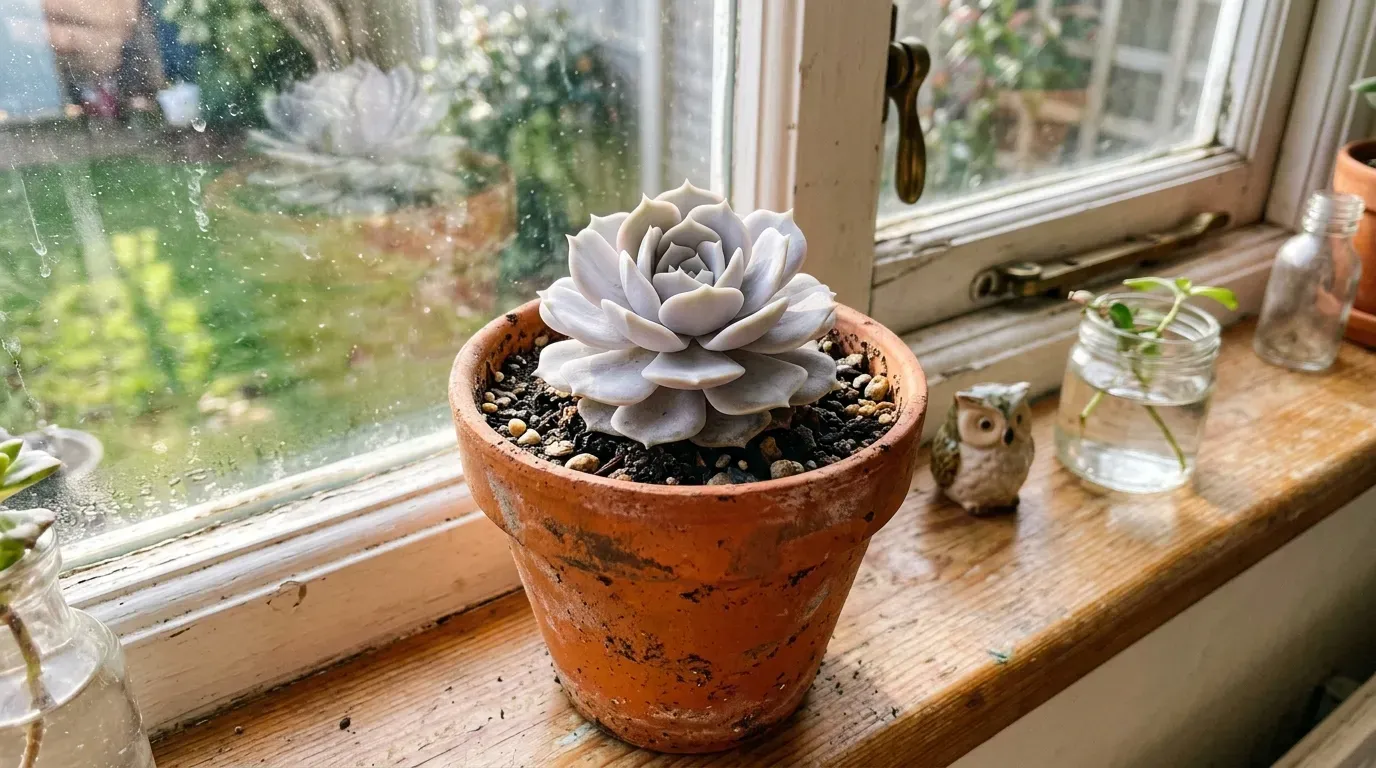
Echeveria ‘Lola’ needs strong light. Give it at least six hours of bright, direct sun so the rose-bud shape stays compact and the marble-grey leaves keep their pink and lavender blush. A south-facing window is the usual indoor fit.
Stretching stems with gaps between leaves mean the light is too weak. Move it closer to the glass, or add a grow light, before you water more. Handle the plant gently. The powdery farina coating is a sun shield. Rubbing it off leaves dull, marked leaves that do not grow the bloom back.
Related sun-lovers like Jade Plant and Blue Bird Jade want the same bright, dry setup.
Watering Schedule
Use soak-and-dry. Soak until water drains, then wait until the mix is fully dry. Water the soil at the edge of the pot, not the leaves and not the center of the rosette. Water sitting in the crown is a fast path to rot.
In spring and summer, the plant uses more water. In winter, water only enough to keep leaves from shriveling. A light terracotta pot is a better cue than a schedule.
Humidity & Temperature
Low humidity is fine. Protect from frost and keep above about 40°F. Prefer a dry, bright windowsill over a steamy bathroom.
Good airflow around the rosette matters more than extra humidity. Crowding ‘Lola’ against other plants that you mist is a common way the center stays wet.
Soil & Potting
Plant in terracotta or another porous pot with drainage holes. Use a gritty succulent mix. A practical blend is about half potting soil and half coarse sand, perlite, or pumice.
A shallow pot suits the shallow roots better than a deep container of unused wet mix. Repot only when the rosette outgrows the rim or pups crowd the surface.
Fertilizer
Feed once a month in spring and summer with a liquid succulent fertilizer diluted to half strength. Skip autumn and winter. Too much fertilizer makes weak, stretched growth that still needs that strong sun.
Pruning & Maintenance
Remove dried lower leaves as they wither so pests and moisture do not hide in the skirt. Do not polish or wipe the farina. If you must clean dust, use a soft, dry brush.
If the plant has already stretched, you can behead it: cut the compact rosette with a short stem, let the cut callus, and replant it in gritty mix. The old stump may push new pups.
Propagation
Leaf cuttings, offsets, and stem cuttings all work. For a leaf, twist a healthy leaf cleanly from the stem, let it callus a day or two, then set it on dry gritty mix. Keep bright light and wait. Pups at the base can be separated once they have a few roots of their own.
Common Problems
Mushy leaves or a collapsing center: Overwatering or water in the rosette. Remove damaged leaves, dry the plant out, and water only the soil next time.
Long neck, wide gaps between leaves: Not enough light. Move to a brighter window or behead and restart the rosette.
Dull, marked leaves: Farina rubbed off. Leave new growth alone so the powder can form.
Shriveled leaves with dry mix: Thirst. Give a deep soak, then return to a full dry-down.
Pro Tips for Long-Term Maintenance
Treat the farina on your Echeveria ‘Lola’ like a finish you do not touch. Water at the soil line with a narrow spout, give it the brightest window you have, and the rose-bud shape holds without stretching.

About the Author
Silas
The Practical Greenhouse Mentor
"Silas treats the greenhouse like a workshop of practical results. After 40 years of dirty hands, he’s learned that thriving plants are the result of honest observation and small, correct moves rather than luck. He’s the neighbor who knows exactly why your Pothos is pouting and how to fix it without the fuss."