
Dragon Tree Care
Keep Dracaena marginata architectural with bright indirect light, a dry-down between waterings, cleaner water for fewer brown tips, and occasional pruning.


Dragon Tree
Dracaena marginata
Care Level
Easy
Light
Bright Indirect
Water
Moderate
Humidity
Moderate
Dragon Trees (Dracaena marginata and related Dracaenas) are built for height and hardiness, but brown tips and mushy canes show up fast when water timing or water quality goes wrong. If yours looks sparse or scorched at the margins, fix light and the dry-down before you add fertilizer.
Plant pros weigh in on a durable baseline: bright indirect light, let a good share of the mix dry between drinks, and use cleaner water when tips keep burning. Get those habits right and the plant can grow into a strong indoor tree form.
Full plant profile: /plant/dragon-tree.
Quick Facts
- Difficulty: Easy
- Light: Bright Indirect
- Water: Water when the top half of the mix is dry
- Pet Safety: Toxic to cats and dogs
Light Requirements
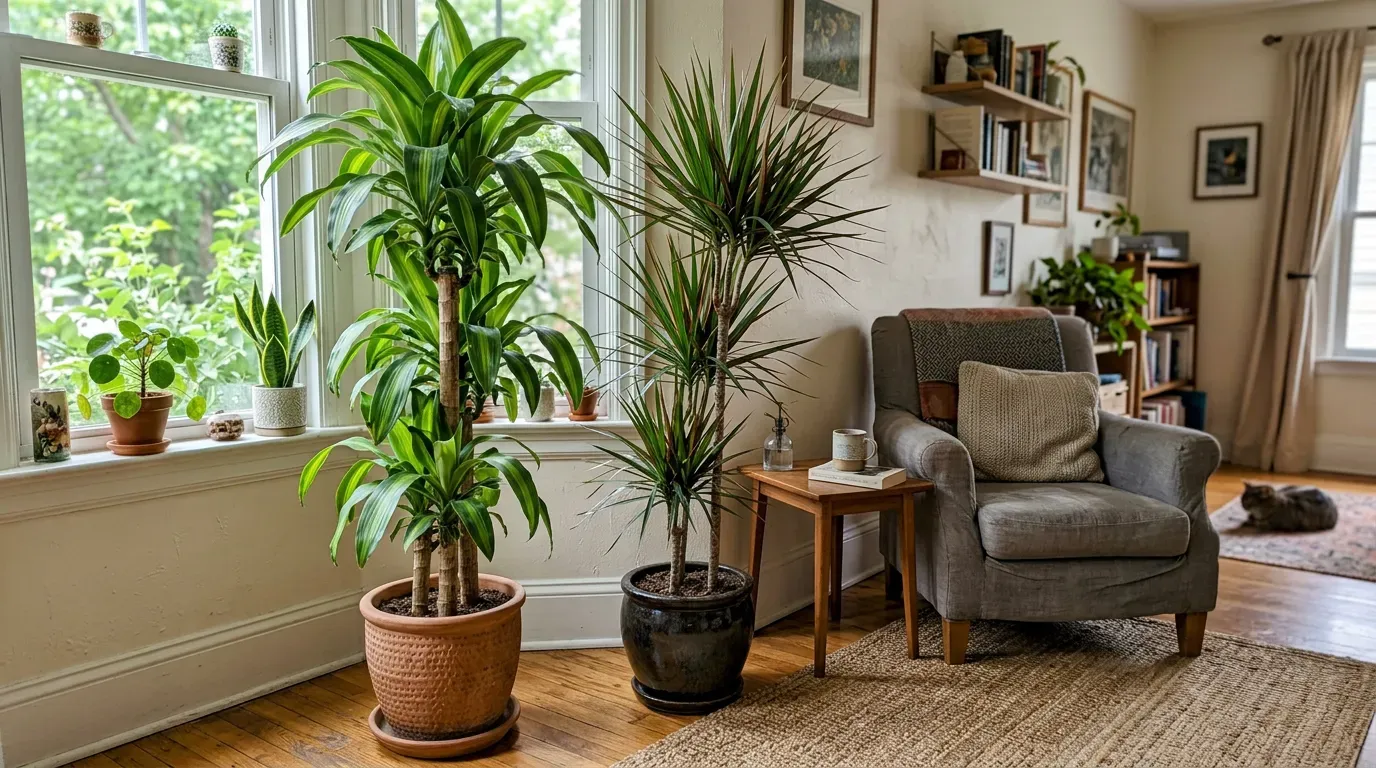
Bright indirect light keeps canes dense and leaves full-sized. Place the plant near a window where it sees open sky without hot midday sun on the foliage. Low light is survivable, but stems stretch and leaves shrink as the plant reaches for energy.
Striped cultivars such as Lemon Lime, Tricolor, or Colorama need more light to hold their markings. In dim rooms, variegation often fades toward solid green. If the plant leans hard toward the glass, rotate it and move it closer to brighter filtered light before you change anything else.
Watering Schedule
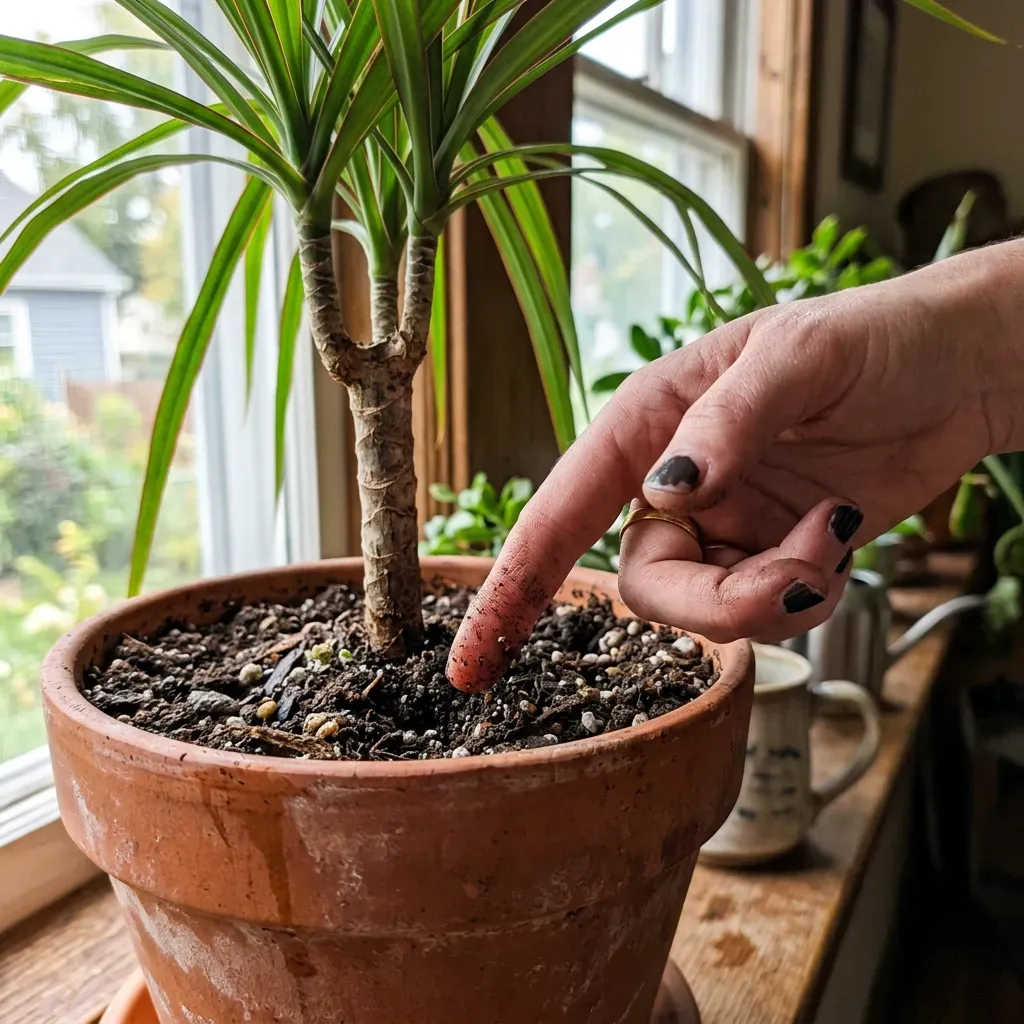
Do not water on a fixed weekday. Wait until the top half of the mix feels dry. The heavy-pot test helps: a freshly watered pot feels dense; a ready pot feels clearly lighter.
Soak thoroughly, empty the saucer, and wait again. Overwatering leads to mushy stems and root rot because roots cannot get oxygen in waterlogged soil. In winter, stretch the interval as growth slows.
Humidity & Temperature
Dragon Trees prefer the same comfort range most people do, roughly 65°F to 80°F. Avoid thermal shock from drafty winter windows or AC vents that dry leaf edges faster than roots can keep up.
Average humidity is often fine, but bone-dry winter air worsens tip burn. A pebble tray or nearby humidifier helps more than brief misting. Once you find a good spot, leave the plant there. Constant moving forces it to recalibrate to new light angles.
Soil & Potting
Use a loose, well-draining indoor mix. A peat-based blend with perlite works well. Dense soil stays wet against woody canes and invites rot.
Always use a planter with drainage holes. Repot every two to three years in spring, or when roots crowd the pot. Bump only one size. Extra unused mix stays damp and does not speed growth.
Fertilizer
Feed monthly in spring and summer with a balanced liquid houseplant fertilizer at the label rate or lightly diluted. Stop in fall and winter.
Do not fertilize a plant browning from salts or sitting in wet soil. Flush the mix if you see a white crust, then resume lighter feeding only when growth is active.
Pruning & Maintenance
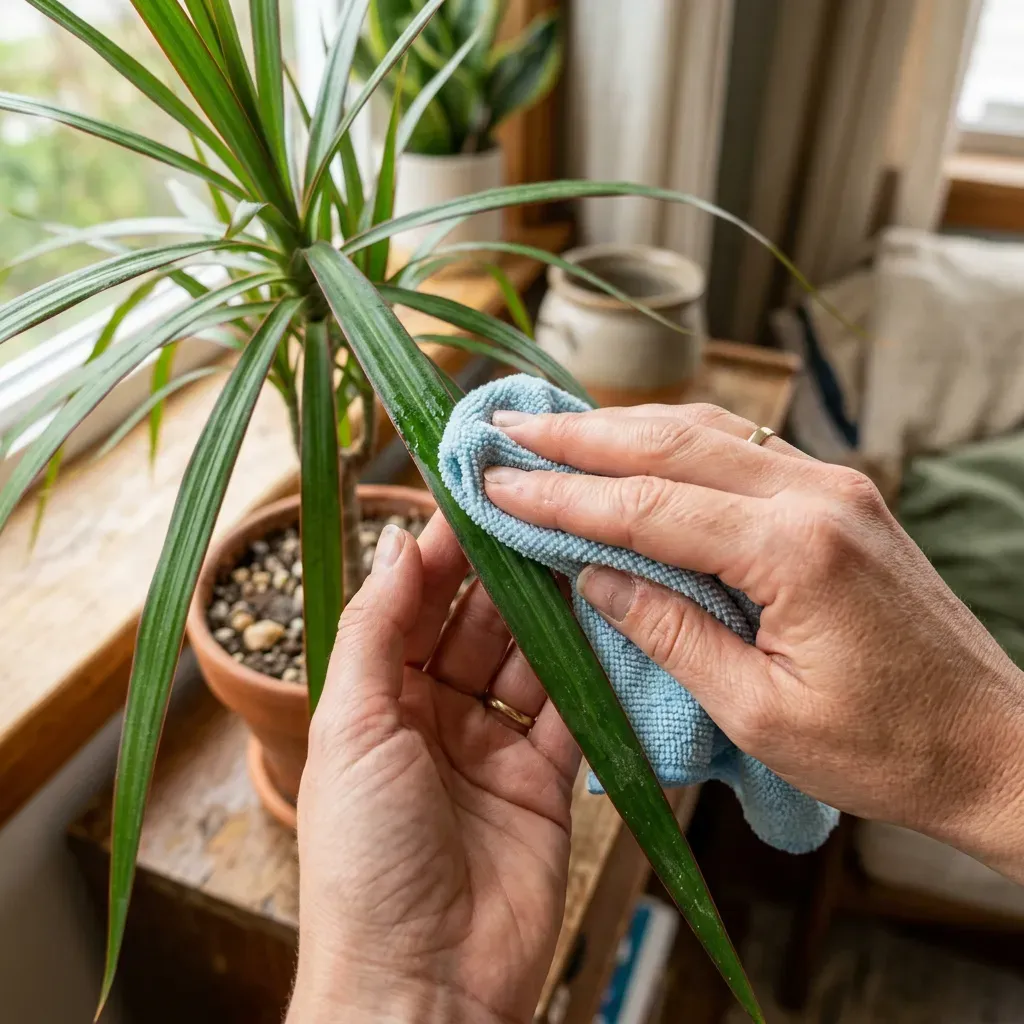
Wipe leaves with a damp cloth so dust does not block light. Check undersides for spider mites while you clean, especially in dry rooms.
If the plant gets too tall or loses lower leaves into a long bare cane, cut it back. A hard prune about six inches below the leafy top encourages branching from the stump and keeps the form manageable indoors.
Propagation
Save the top you cut. Root the clean cut end in room-temperature water in bright indirect light.
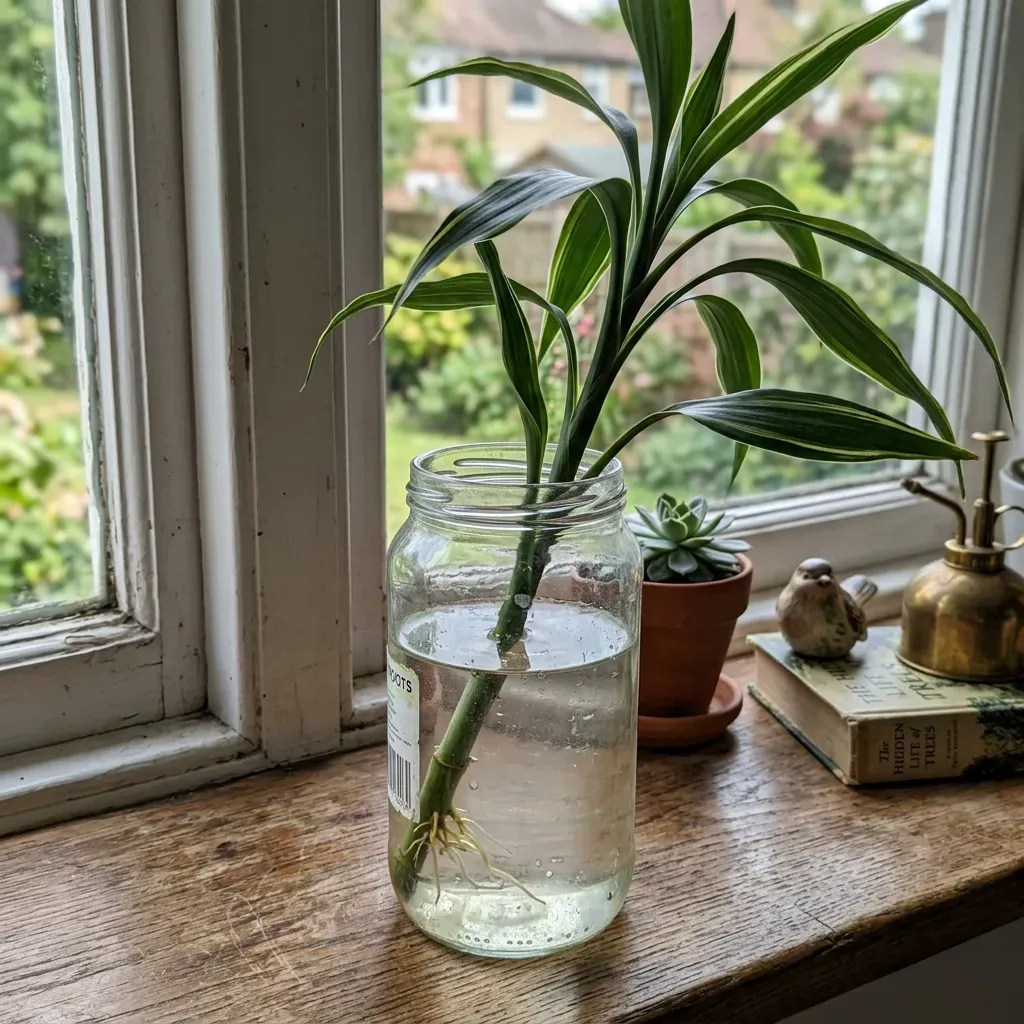
When white roots are a few inches long, pot the cutting into fresh, well-draining mix. Keep the mother cane lightly watered while new heads break below the cut. Stem cuttings and air layering both work for thicker canes.
Common Problems
Brown crispy tips: Often fluoride or chlorine in tap water, dry air, or irregular watering. Rest tap water 24 hours, or switch to rainwater, distilled, or filtered water before you assume the plant is simply thirsty.
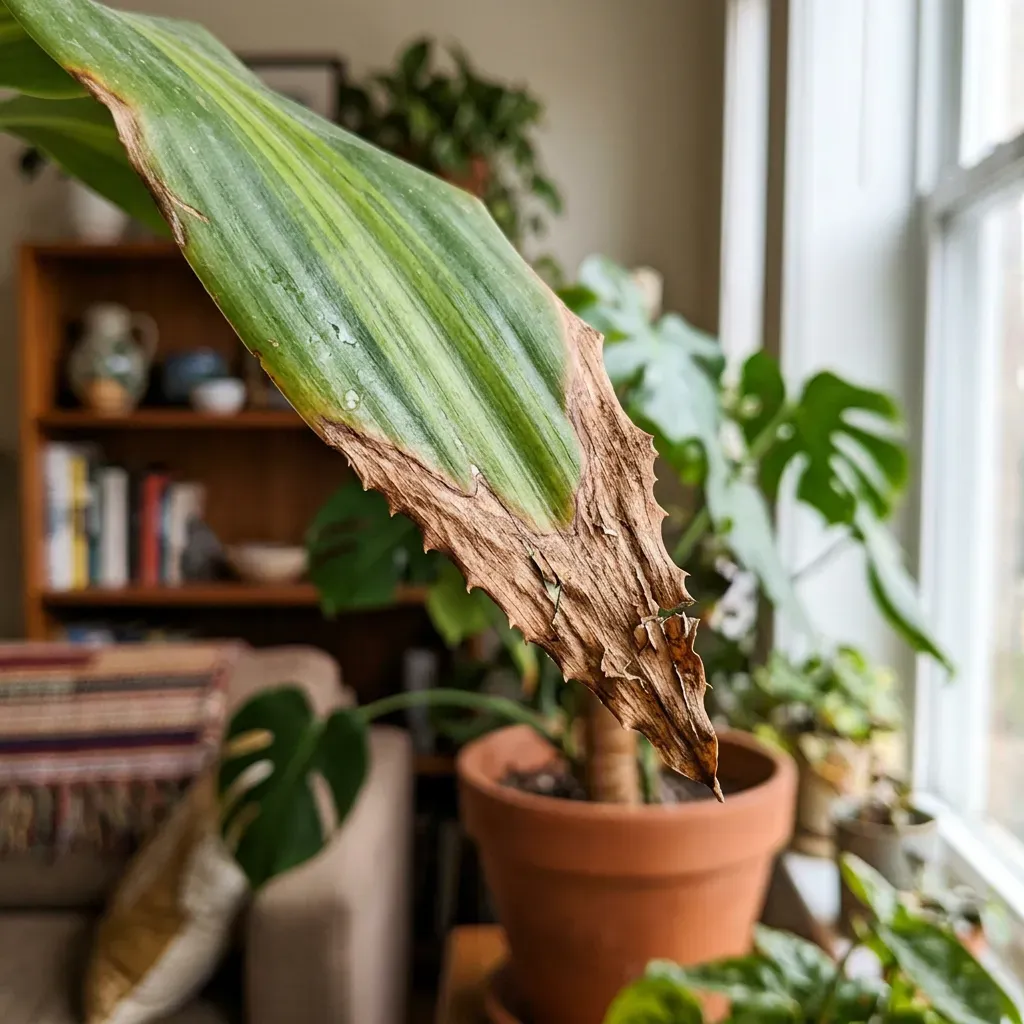
Mushy cane / yellow soft leaves: Overwatering. Dry down harder and inspect roots.
Leggy stretch / faded stripes: Light is too low. Move to brighter indirect exposure.
Spider mites: Fine webbing in dry, dusty rooms. Wipe leaves and treat early.
Pet exposure: Toxic if chewed. Place out of reach.
Pro Tips for Long-Term Maintenance
When you chop a leggy cane, propagate the top and keep the stump. You get a new plant plus a bushier mother as new heads emerge from the cut. Pair that prune with cleaner water and a real dry-down, and brown tips become much less of a weekly mystery.

About the Author
Silas
The Practical Greenhouse Mentor
"Silas treats the greenhouse like a workshop of practical results. After 40 years of dirty hands, he’s learned that thriving plants are the result of honest observation and small, correct moves rather than luck. He’s the neighbor who knows exactly why your Pothos is pouting and how to fix it without the fuss."