
Dracaena Compacta Care
Grow Dracaena fragrans 'Compacta' with bright indirect light, a long dry-down between drinks, and cleaner water to reduce brown tips.


Dracaena Compacta
Dracaena fragrans 'Compacta'
Care Level
Easy
Light
Medium
Water
Low
Humidity
Moderate
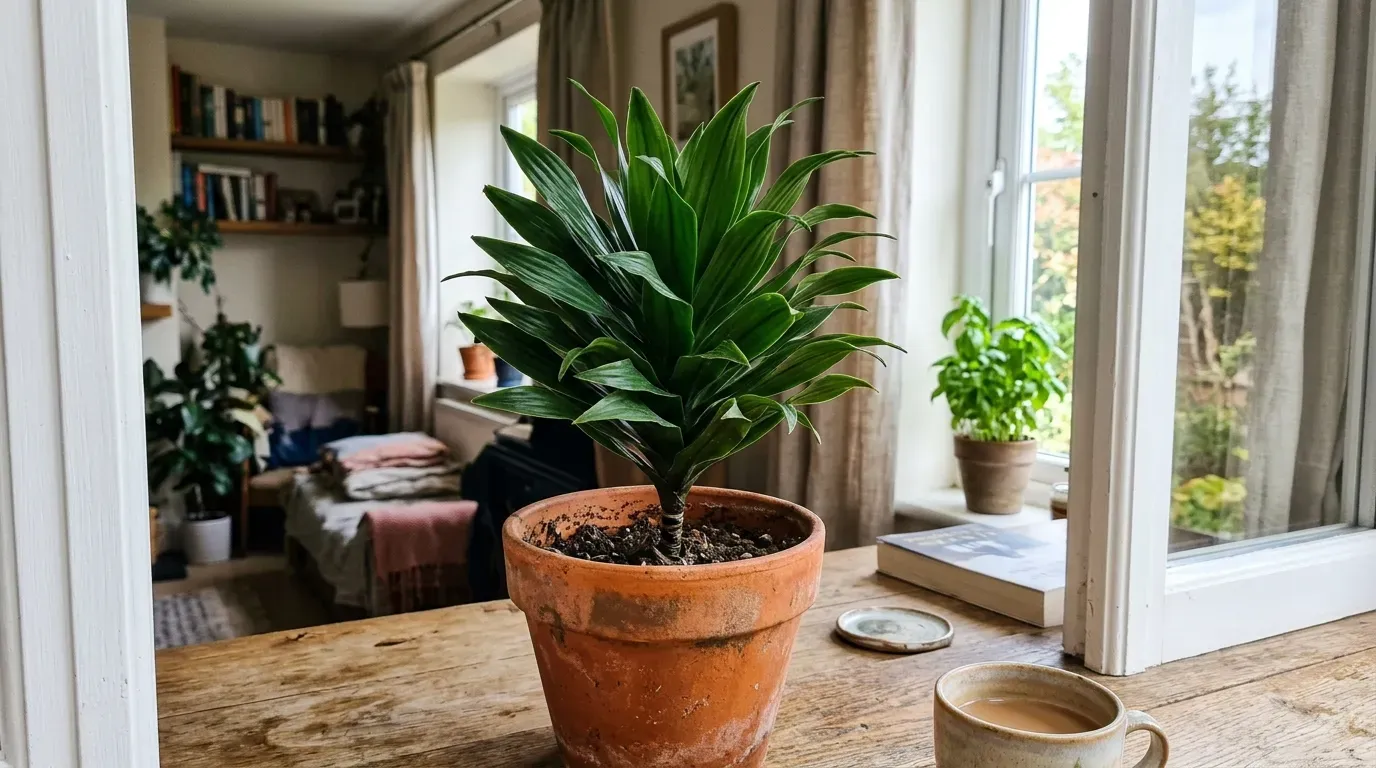
The Dracaena fragrans ‘Compacta’ (Dracaena Compacta, often sold as Janet Craig Compacta) is a slow, architectural cane plant with tight clusters of deep green swords. Brown tips are the complaint plant pros hear most, and the usual causes are hard tap water, dry winter air, or watering before the mix has dried.
Give it bright indirect light, a thorough dry-down between waterings, and water that is kinder than hard tap when tips keep browning. It is toxic to pets if chewed.
Full plant profile: /plant/dracaena-compacta.
Quick Facts
- Difficulty: Easy
- Light: Medium to bright indirect
- Water: Water when the top half of the mix is dry
- Pet Safety: Toxic to cats and dogs
Light Requirements
Medium to bright indirect light keeps the rosette dense. An east window is ideal. South or west light works a few feet back from hot glass. Low light is survivable, but growth slows and stems stretch.
Direct sun scorches the dark leaves. If the plant leans hard toward the window, rotate weekly and move it closer to brighter filtered light before you fertilize.
Variegated relatives in the same family (like the Corn Plant) need more light to hold stripes. Solid green Compacta is more forgiving, but it still prefers seeing open sky.
Watering Schedule
Let a large share of the mix dry before watering. For Compacta, that often means the top half feels dry. Soak thoroughly, empty the saucer, and wait again. In cooler months, stretch the interval.
Overwatering softens stems and starts root rot. Underwatering crisps tips and stalls new growth. Look at the leaves and the pot weight together.
Fluoride and chlorine in tap water often show up as brown tips on Dracaenas. If tips keep burning despite careful watering, switch to filtered, distilled, or rested water.
Humidity & Temperature
Moderate humidity helps. Dry winter heat worsens tip burn. Group plants or use a humidifier if the air is bone-dry. Brief misting is not a lasting fix.
Keep temperatures roughly 65°F to 80°F. Protect from cold drafts and sudden drops. Stable warmth beats a spot next to a blasting vent.
Soil & Potting
Use a well-draining, peat-based indoor mix with perlite for air. Roots need moisture and oxygen. Dense soil stays wet against canes and invites rot.
Always use a drainage hole. Repot every two to three years in spring, or when roots crowd the pot. Bump only one size. Compacta grows slowly, so it does not need frequent upsizing.
Fertilizer
Feed every four to six weeks in spring and summer with a balanced liquid houseplant fertilizer at the label rate or diluted. Hold fertilizer in winter.
Do not fertilize a plant that is browning from salts or wet roots. Flush the mix if you see a white crust, then resume lighter feeding only when growth is active.
Pruning & Maintenance
Wipe leaves with a damp cloth to remove dust and spot-check for spider mites. Trim brown tips with clean shears, cutting only dead tissue and leaving a thin brown edge if needed so you do not reopen green tissue.
If the cane gets too tall, you can cut it back and root the top section. New heads often break below a clean cut on the old stump.
Propagation
Stem cuttings and air layering both work. Take a healthy top cut, let the wound dry briefly, and root in water or moist mix under bright indirect light. Keep the mother cane lightly watered while it pushes new growth.
Common Problems
Brown tips: Water quality, dry air, or irregular watering. Improve water source and humidity before you assume under-watering alone.
Yellow soft leaves / mushy cane: Overwatering. Dry down harder and check roots.
Spider mites: Fine webbing in dry rooms. Wipe leaves and treat as needed.
Pet exposure: Toxic if eaten. Place out of reach.
Pro Tips for Long-Term Maintenance
If tips brown while the pot stays heavy, do not water more. Flush with cleaner water, empty the saucer, and lengthen the dry-down. Compacta forgives neglect more than constant wet feet.

About the Author
Silas
The Practical Greenhouse Mentor
"Silas treats the greenhouse like a workshop of practical results. After 40 years of dirty hands, he’s learned that thriving plants are the result of honest observation and small, correct moves rather than luck. He’s the neighbor who knows exactly why your Pothos is pouting and how to fix it without the fuss."