
Cupid Peperomia Care
Keep trailing Cupid Peperomia healthy with bright indirect light, a chunky mix, and a dry-down that respects those semi-succulent heart-shaped leaves.


Cupid Peperomia
Peperomia scandens
Care Level
Easy
Light
Bright Indirect
Water
Moderate
Humidity
Moderate
If your Cupid Peperomia yellows, drops leaves, or stretches into bare stems, overwatering or weak light is usually the story. Those thick, heart-shaped leaves store water. The plant forgives a dry spell far more than a soggy pot.
Plant pros weigh in on a simple baseline: bright indirect light, let the top half of the mix dry, and keep the planter small with real drainage holes. Variegated types need the brighter end of filtered light to keep their white margins.
Full plant profile: /plant/cupid-peperomia/.
Quick Facts
- Difficulty: Easy
- Light: Bright Indirect
- Water: Allow the top 50 percent of the soil to dry
- Pet Safety: Safe
Light Requirements
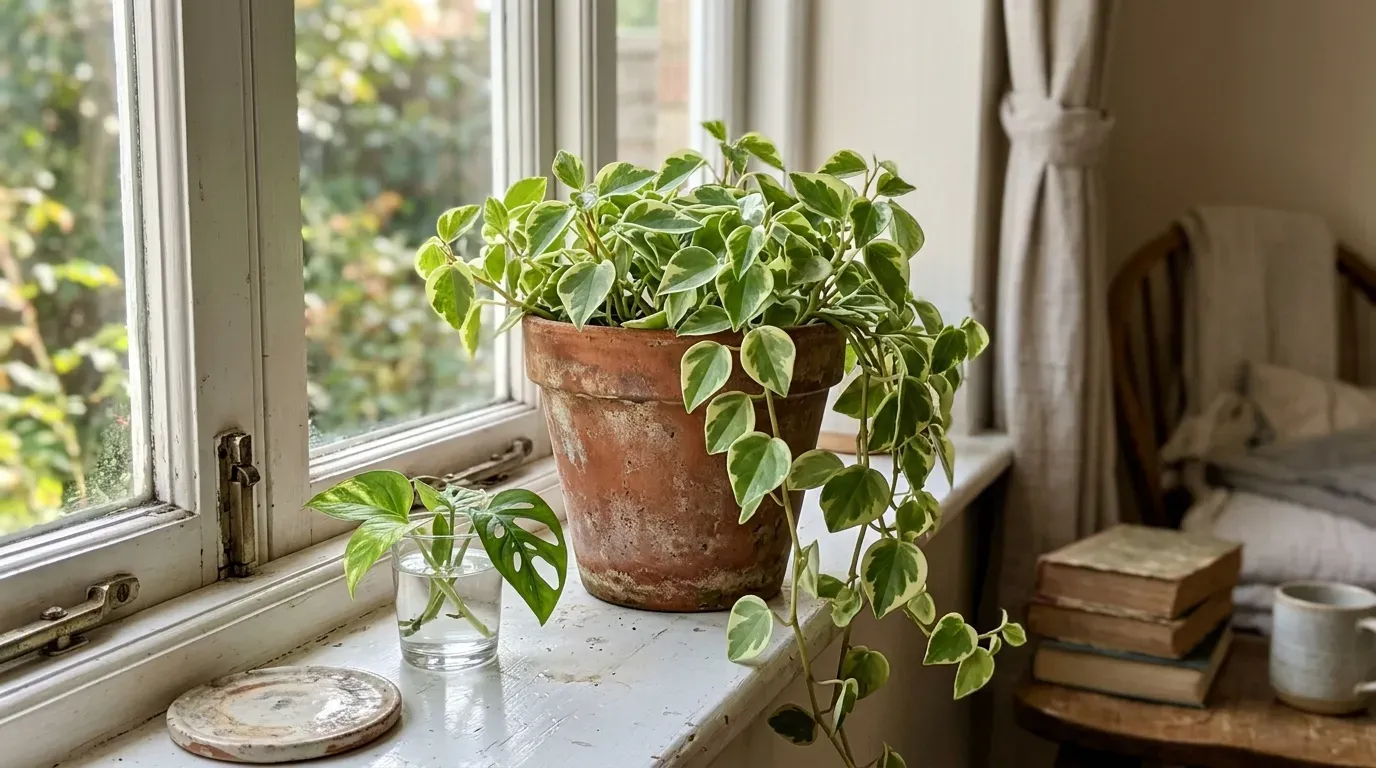
Cupid Peperomia (Peperomia scandens) loves bright, indirect light. In the wild it climbs tree trunks under a filtered canopy.
Variegated plants need the brighter end of that range. White margins do not feed the plant, so green tissue has to work harder. In low light, new leaves often come in solid green. Direct afternoon sun scorches those heart-shaped leaves. An east or west window is a strong fit.
Watering Schedule
Treat this plant like a semi-succulent. Let the top fifty percent of the soil dry before you water again. Stick your finger deep into the pot, or lift it to feel the weight. If the pot feels heavy or the soil is damp, wait.
When it is time, soak thoroughly until water drains out the bottom. During winter, reduce frequency as growth slows. Overwatering is a bigger risk than short dry spells.
Humidity & Temperature
These plants enjoy warm air and moderate humidity, and they adapt to most homes. Prefer temperatures between 65°F and 80°F.
Protect them from cold winter drafts near window glass. If your home gets very dry, use a pebble tray or group the pot with other leafy plants.
Soil & Potting
Use a mix that drains quickly. Standard bagged soil alone holds water too long. Mix two parts potting soil with one part perlite and one part orchid bark.
Select a pot with drainage holes. Cupid Peperomias have shallow roots and do best in small pots. A large pot holds too much wet soil for the root ball to process.
Fertilizer
Feed once a month during spring and summer with a liquid houseplant fertilizer diluted to half strength. Do not feed in autumn and winter. Too much fertilizer builds salts that damage shallow roots.
Pruning & Maintenance
Trim stems just above a leaf node to keep vines full instead of sparse at the top. The plant branches from the cut node. Wipe leaves occasionally with a damp cloth to clear dust and keep foliage glossy.
Propagation
Cut a stem section with at least two or three leaves. Remove lower leaves to expose nodes. Place the cut end in clean water with at least one bare node submerged, or stick it into moist airy mix.
Keep bright, indirect light. Roots often show in two to three weeks. Pot up when roots are about an inch long.
Common Problems
Yellow, soft, dropping leaves with wet soil: Overwatering and possible root rot. Stop watering and let the mix dry. If stems feel mushy at the soil line, cut healthy stems above the damage and propagate them.
Leggy bare stems: Not enough light. Move closer to a window.
Shriveled, dull leaves: Mix is bone dry. Give a deep watering, then return to the dry-down rhythm.
Pro Tips for Long-Term Maintenance
Do not trust the soil surface alone. Give a leaf near the base of your Cupid Peperomia a gentle pinch. If it feels firm and thick, wait. If it feels slightly soft with a bit of give, the water stores are low and it is time to soak. That leaf check keeps shallow roots safer than a calendar.

About the Author
Silas
The Practical Greenhouse Mentor
"Silas treats the greenhouse like a workshop of practical results. After 40 years of dirty hands, he’s learned that thriving plants are the result of honest observation and small, correct moves rather than luck. He’s the neighbor who knows exactly why your Pothos is pouting and how to fix it without the fuss."