
Crown of Thorns Care
Grow Euphorbia milii with hard light, sparse watering, and careful handling of the milky sap that makes this plant a tough, long-blooming windowsill shrub.


Crown of Thorns
Euphorbia milii
Care Level
Easy
Light
Full Sun
Water
Low
Humidity
Low
If your Crown of Thorns stops blooming or softens at the base, soft light and wet soil are usually to blame. This spiny, sun-loving shrub blooms for months when it gets hard light and dry feet. Treat it more like a succulent than a soft tropical.
Plant pros weigh in on a clear baseline: serious sun, soak-and-dry watering, and gloves around the milky sap. Spines and sap are not a casual plant. Keep it away from pets and kids.
Full plant profile: /plant/crown-of-thorns/.
Quick Facts
- Difficulty: Easy
- Light: Full sun to very bright light
- Water: Soak thoroughly, then wait until the mix is fully dry
- Pet Safety: Toxic. Sap irritates skin and is dangerous if eaten
Light Requirements
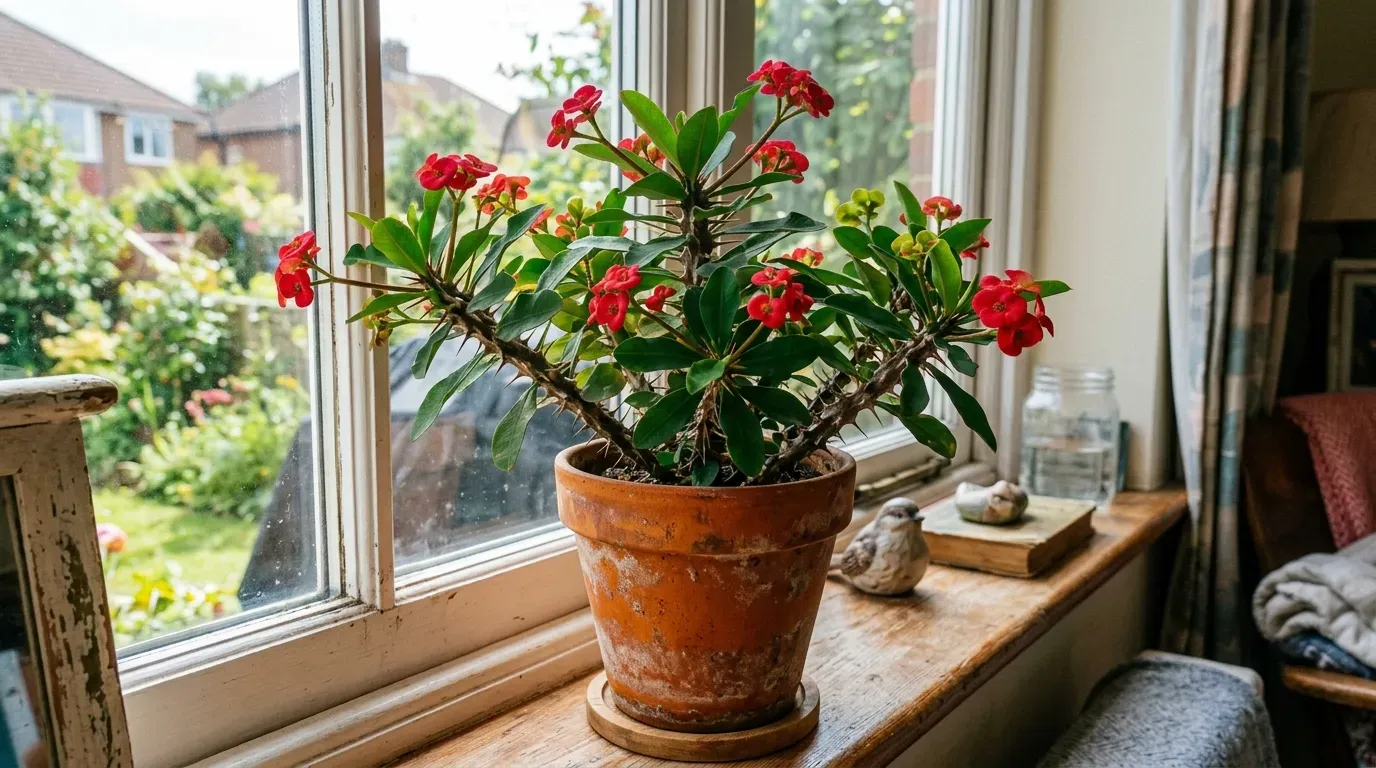
This plant wants serious light. A south window is the indoor best case. Without strong light, flowering slows and stems stretch. Bright east can work if the plant sits close to the glass. North rooms usually disappoint.
Rotate the pot so all sides get sun. If you summer it outdoors, ease it into direct light over a week so soft indoor growth does not burn. Flower color and count track light more than fertilizer. Fix the window first.
Watering Schedule
Use soak and dry. Water until drainage runs clear, dump the saucer, then wait until the mix is dry deep down. In bright heat that may be every one to two weeks. In winter, stretch further.
Overwatering softens stems and starts rot at the base. Underwatering wrinkles leaves and stalls bloom, but recovery is usually easy after a thorough soak. When unsure, wait. Never leave the pot in a standing puddle.
Humidity & Temperature
Low humidity is fine. Average home air works. Mist is the wrong tool and makes sap cleanup worse if you prick yourself.
Keep temperatures roughly 65°F to 85°F. Protect below about 50°F. Cold plus wet soil is a bad pair. Stable warmth and hard light keep blooms coming.
Soil & Potting
Use a fast-draining cactus or succulent mix. A practical mix:
- One part cactus mix
- One part pumice or perlite
Always use a drainage hole. Terra cotta helps drying and anchors a top-heavy, spiny plant. Repot every two to three years in spring. Wear gloves and eye protection. Bump only one pot size.
After repotting, wait several days before watering so wounds can seal.
Fertilizer
Feed lightly in spring and summer with a balanced liquid fertilizer diluted to half strength every four to six weeks, or use a cactus fertilizer as labeled. Hold fertilizer in winter. Extra feed will not replace missing sun.
Pruning & Maintenance
Prune in warm months for shape and size. Use clean tools. Expect milky sap. Let cuts dry and callus. Wipe sap off skin immediately with soap and water. Keep sap away from eyes.
Remove spent flower clusters and weak stems. Put the plant where sleeves and pets will not brush the spines. This is not a coffee-table plant for curious toddlers or chewing dogs.
Propagation
Stem cuttings work in warm months. Take a healthy tip, let the cut callus for several days until dry, then set it in dry grit. Wait a week or more before light watering. Roots form from a sealed wound, not a wet one.
Wear gloves through the whole process. Label the pot so nobody mistakes it for a friendly soft herb.
Common Problems
Root or stem rot: Soft base after wet soil. Cut to firm tissue, callus, and restart in dry grit with longer dry spells.
No flowers: Not enough light. Move to a brighter south exposure before you change fertilizer.
Leaf drop: Often watering extremes or a cold draft. Stabilize light and dry-down rhythm.
Sap burns / eye irritation: Rinse immediately and seek care if sap hits eyes. Handle with gloves every time.
Pet or child exposure: Toxic. Relocate the plant to a closed, high, or gated space.
Pro Tips for Long-Term Maintenance
If bloom slows on your Crown of Thorns in winter, do not drown the plant to force flowers. Give it the brightest window you have, keep the mix dry longer, and wait for longer days. Light and rest do more than extra water, and gloves stay part of every pruning session.

About the Author
Silas
The Practical Greenhouse Mentor
"Silas treats the greenhouse like a workshop of practical results. After 40 years of dirty hands, he’s learned that thriving plants are the result of honest observation and small, correct moves rather than luck. He’s the neighbor who knows exactly why your Pothos is pouting and how to fix it without the fuss."