
Common Thyme Care
Grow Thymus vulgaris on a sunny sill with a dry-down watering rhythm, gritty soil, and light harvests that keep the plant dense.


Common Thyme
Thymus vulgaris
Care Level
Easy
Light
Full Sun
Water
Low
Humidity
Low
If your thyme tastes dull or the center goes woody and bare, weak light and wet soil are the usual suspects. This Mediterranean herb wants hard light, lean soil, and dry feet between drinks. It is pet-safe and built for cooks who harvest often.
Plant pros weigh in on a clear baseline: a south window when you can get one, a gritty mix, and soak-and-dry watering. Thyme forgives drought better than kindness with the watering can.
Full plant profile: /plant/common-thyme/.
Quick Facts
- Difficulty: Easy
- Light: Full Sun (6 to 8 hours)
- Water: Soak thoroughly, then wait until the mix is fully dry
- Pet Safety: Safe for cats, dogs, and horses
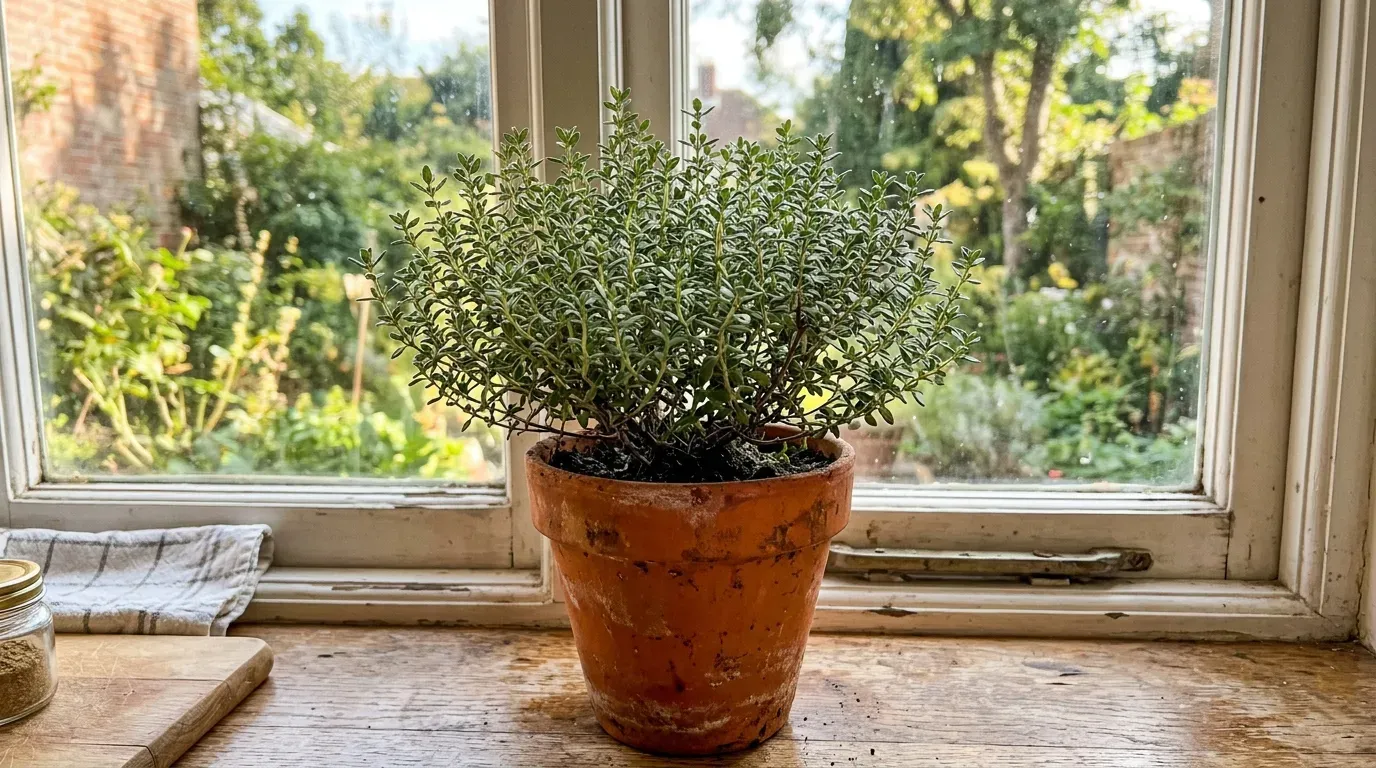
Light Requirements
Thyme runs on sun. Aim for at least six to eight hours of direct light. A south-facing window is the indoor default. East can work if the plant sits tight against the glass. Weak light makes stems stretch, flavor fade, and the woody base look sparse.
Rotate the pot weekly. Even light keeps the mound compact. If you move it outdoors for summer, ease it into stronger sun over a few days so tender indoor growth does not scorch.
Watering Schedule
Use soak and dry. Water deeply until excess drains, empty the saucer, then wait until the mix is dry. In a bright, warm room that may be every one to two weeks. In cooler months, stretch further.
Overwatering is the usual failure. Woody Mediterranean herbs rot when soil stays wet. Soft, yellowing growth with a heavy pot means too much water. Dry, brittle tips with a light pot mean it is time to drink. When unsure, wait.
Humidity & Temperature
Low humidity is fine. Do not mist. Wet foliage in still air invites problems without helping the roots.
Keep temperatures roughly 60°F to 75°F indoors. Protect from freezing nights if the pot sits outdoors. Steady warmth and hard light beat a steamy kitchen corner with weak sun.
Soil & Potting
Use sandy or gritty, well-drained soil. A practical mix:
- One part potting mix
- One part coarse sand, perlite, or grit
Always use a drainage hole. Terra cotta helps the mix dry. Repot every one to two years in spring, or when the center gets woody and sparse. Bump only one pot size.
After repotting, wait a few days before the first deep watering.
Fertilizer
Feed sparingly. A balanced organic liquid fertilizer or fish emulsion at half strength once in early spring and once in mid-summer is enough for most pots.
Skip winter feeding. Heavy fertilizer makes soft, bland growth. Herbs for the kitchen want lean conditions and strong light more than a rich diet.
Pruning & Maintenance
Harvest often. Snip stems just above a leaf pair rather than stripping the plant bald. Regular cuts keep growth dense and delay a woody, bare center.
In spring, trim lightly to shape after winter stretch. Remove dead wood at the base. Flower clusters are fine if you want bees outdoors; pinch them if you want maximum leaf production indoors.
Keep the pot in the brightest spot you have. No amount of pruning fixes a dark sill.
Propagation
Stem cuttings root well in spring and early summer. Take non-flowering tips, strip the lower leaves, and set them in barely moist grit. Keep bright and warm. Layering and spring division also work on mature clumps.
Do not overwater cuttings. Callus and light moisture beat a soggy cup.
Common Problems
Root rot: Soft collapse after wet soil. Restart cuttings from firm tips and switch to grittier mix.
Leggy growth: Not enough light. Move to a brighter window before you fertilize.
Weak flavor: Low light or overfeeding. Lean the care back toward sun and sparse water.
Spider mites in dry rooms: Fine webbing and dull leaves. Rinse and improve airflow. Treat if needed.
Woody bare center: Age plus weak light or timid harvesting. Take cuttings and restart a denser plant.
Pro Tips for Long-Term Maintenance
If your Common Thyme tastes dull, check the window before the fertilizer bottle. Strong sun and a dry-down rhythm put more oil in the leaves than any feeding schedule. Harvest often above a leaf pair so the mound stays dense instead of woody at the center.

About the Author
Silas
The Practical Greenhouse Mentor
"Silas treats the greenhouse like a workshop of practical results. After 40 years of dirty hands, he’s learned that thriving plants are the result of honest observation and small, correct moves rather than luck. He’s the neighbor who knows exactly why your Pothos is pouting and how to fix it without the fuss."