
Christmas Fern Care
Grow Polystichum acrostichoides indoors with soft light, steady moisture, and enough humidity to keep the leathery evergreen fronds glossy.


Christmas Fern
Polystichum acrostichoides
Care Level
Easy
Light
Low
Water
Moderate
Humidity
High
If your Christmas Fern tips crisp or the clump thins, dry air or a swinging wet-dry cycle is usually behind it. This hardy evergreen fern holds glossy, leathery fronds through winter and is tougher than many delicate tropical ferns, but it still wants soft light and evenly moist soil that drains.
Plant pros weigh in on a simple baseline: filtered light, consistent moisture without a swamp, and air that is not bone-dry. It is pet-safe and a strong pick for cooler, shadier indoor corners.
Full plant profile: /plant/christmas-fern/.
Quick Facts
- Difficulty: Easy
- Light: Low to medium indirect
- Water: Keep evenly moist; water when the surface just starts to dry
- Pet Safety: Safe for cats, dogs, and horses
Light Requirements
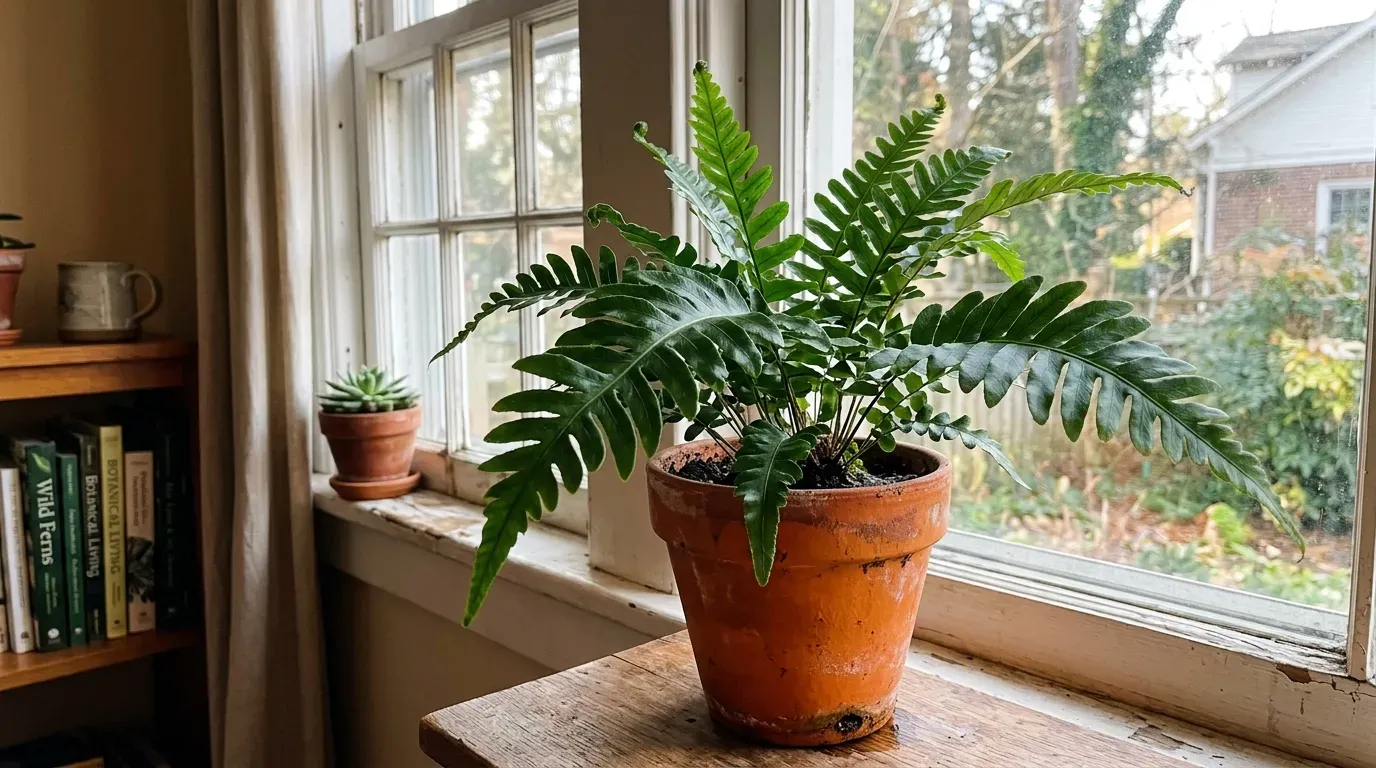
This fern evolved on woodland floors. Soft, filtered light is the goal. A north window or a bright room a few feet from east light works well. Direct sun scorches and bleaches the deep green fronds.
Too little light slows growth and can thin the clump over time, but this species tolerates dimmer spots better than many tropical ferns. If fronds look dull and sparse, move closer to brighter indirect light before you change fertilizer.
Rotate the pot weekly so the fountain shape stays even.
Watering Schedule
Keep the mix consistently moist without turning the pot into a swamp. Water when the surface just begins to feel dry. Soak thoroughly until excess leaves the drainage holes, then empty the saucer.
Chronic dryness crisps leaflet tips and stalls new fiddleheads. Constant sogginess invites crown and root rot. Crispy edges with a light pot point to underwatering or dry air. Yellowing soft fronds with a heavy pot point to too much water.
Use room-temperature water.
Humidity & Temperature
Higher humidity helps, especially in winter when HVAC dries the house. Group plants, use a pebble tray, or run a small humidifier. Brief misting helps for minutes, not hours.
Keep temperatures roughly in the 60°F to 75°F range indoors. Protect from hot heating vents and cold drafts. Outdoors in cold climates, fronds may flatten under snow. That is normal protection. Indoors, just keep the pot away from blasting heat.
Soil & Potting
Use a moist, well-drained mix rich in organic matter. A practical mix:
- Two parts quality potting mix or fern mix
- One part perlite or fine bark for drainage
- A handful of leaf mold or compost for structure (optional)
Always use a pot with a drainage hole. Repot in early spring when the root ball is crowded. Bump only one pot size.
Fertilizer
Feed monthly in spring through late summer with a balanced liquid houseplant fertilizer diluted to half strength. Suspend fertilizer in fall and winter. If you see a white crust on the soil, flush with plain water and hold feed until active growth returns.
Do not fertilize a plant that is browning from dry air or wet feet. Fix those first.
Pruning & Maintenance
In early spring, cut away old, tattered fronds at the base. New fiddleheads emerge from the center of the clump. Wipe or rinse dusty fronds when they look dull. Remove spent debris from the crown so air can move through the center.
Keep pets from digging in the mix even though the plant is non-toxic. A top dressing of pebbles helps if dogs explore pots.
Propagation
Division is the dependable method. In early spring, slice or tease a mature clump into sections. Each piece needs roots plus some healthy fronds or fiddleheads. Pot each division into fresh, draining mix at the same depth it grew before. Keep evenly moist while it re-anchors.
Spores are possible but slower and fussier. Division gives you a matching plant faster.
Common Problems
Crispy tips: Dry air, underwatering, or fertilizer salts. Stabilize moisture and humidity. Flush if salts are visible.
Yellow soft fronds: Often overwatering or poor drainage. Check pot weight and holes.
Scorched patches: Too much direct sun. Move back from the glass.
Scale or mealybugs: Uncommon but possible. Wipe fronds and treat with insecticidal soap as directed if needed.
Crown rot: Soft collapse after chronic wet soil. Improve drainage and water more carefully.
Pro Tips for Long-Term Maintenance
Do not strip every old frond on your Christmas Fern in winter just because they look tired. Leave some cover until spring fiddleheads are ready. That evergreen mass buffers the plant while house air is at its driest, then a spring cleanup opens space for fresh growth.

About the Author
Silas
The Practical Greenhouse Mentor
"Silas treats the greenhouse like a workshop of practical results. After 40 years of dirty hands, he’s learned that thriving plants are the result of honest observation and small, correct moves rather than luck. He’s the neighbor who knows exactly why your Pothos is pouting and how to fix it without the fuss."