
Christmas Cactus Care
Grow Schlumbergera buckleyi with bright indirect light, a chunky mix, and the cool nights that help set winter blooms.


Christmas Cactus
Schlumbergera buckleyi
Care Level
Easy
Light
Bright Indirect
Water
Moderate
Humidity
High
If your Christmas Cactus drops buds or softens at the joints, treat it like a rainforest epiphyte, not a desert barrel. It wants bright filtered light, a mix that breathes, and moisture with a dry pause between drinks. Cool nights and longer darkness in fall help set the holiday blooms.
Plant pros weigh in on a practical baseline: steady watering through bud set, no sudden moves once buds form, and an airy mix with drainage holes. Stability beats last-minute tinkering.
Full plant profile: /plant/christmas-cactus/.
Quick Facts
- Difficulty: Easy
- Light: Bright Indirect
- Water: Water when the top inch or two of mix dries
- Pet Safety: Non-toxic, though large nibbles can still upset a sensitive stomach
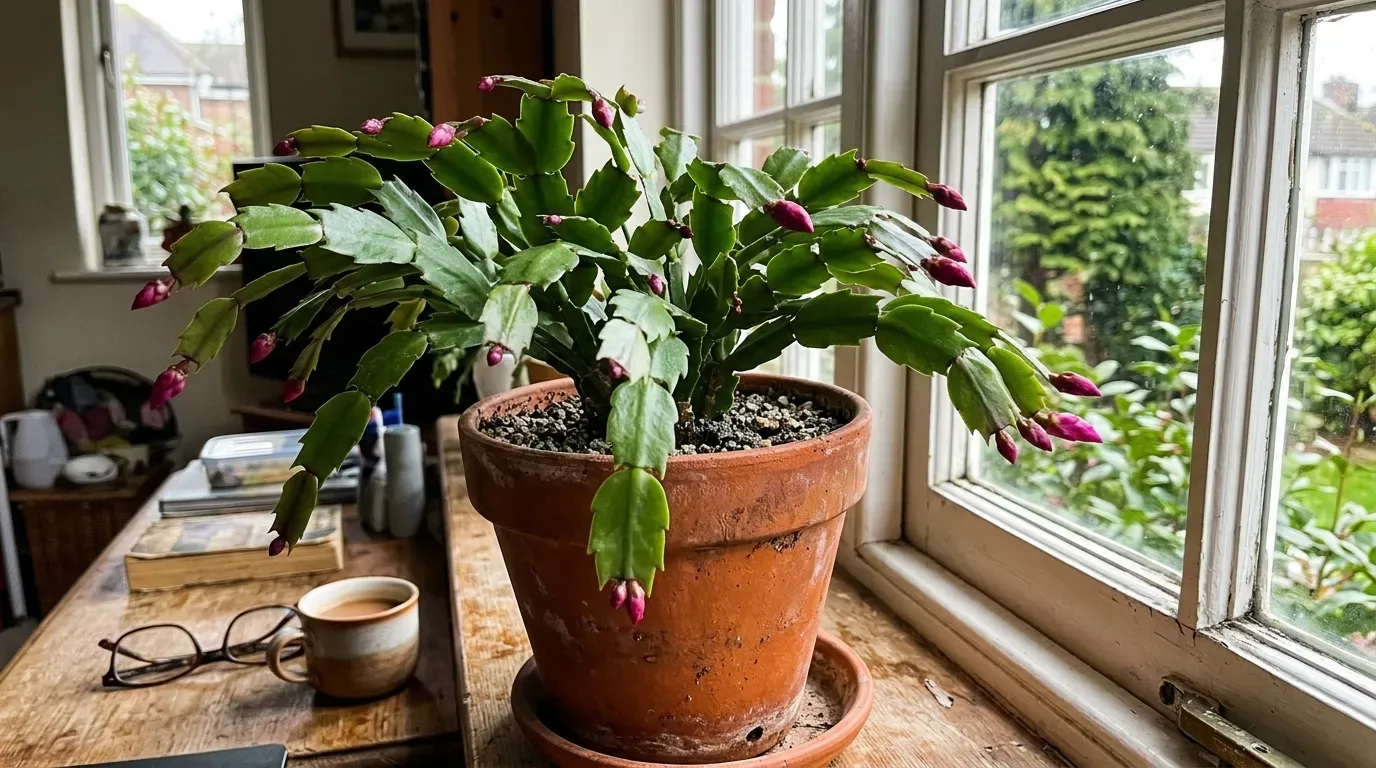
Light Requirements
Bright, filtered light keeps the segments firm and green. An east window is ideal. A bright north room can work. South or west light is fine behind a sheer or a few feet back from hot glass.
Hard midday sun scorches the flat segments. Weak light thins growth and reduces flowering. Rotate the pot weekly so the cascade stays even.
In fall, keep the plant where it can sense shorter days. Constant evening lamp light near the pot can confuse bloom timing.
Watering Schedule
Water when the top inch or two of mix feels dry. Soak thoroughly, let excess drain, and empty the saucer. Do not treat it like a desert cactus that sits dry for a month.
Overwatering softens segments and starts root rot. Underwatering wrinkles the pads and drops buds. Firm and plump is good. Limp and wrinkled usually means water. Mushy and translucent usually means too much water for too long.
During bud set and bloom, keep the rhythm steady. Big wet-dry swings drop flower buds.
Humidity & Temperature
This plant likes more humidity than desert cacti. Average home air can work, but dry heat vents crisp edges. A pebble tray or nearby humidifier helps in winter.
Grow in roughly 65°F to 75°F most of the year. For bloom set, many plants respond to cooler nights around the low 50s to low 60s for several weeks in fall, plus longer nights. Keep it away from sudden hot blasts and cold drafts once buds appear.
Soil & Potting
Use an airy, well-drained mix. Epiphytic roots want moisture and oxygen. A practical mix:
- Two parts peat-based or quality potting mix
- One part perlite or coarse sand
- Optional orchid bark for extra air
Always use a drainage hole. Christmas cacti often bloom better when slightly snug. Repot every two to three years after flowering, not in the middle of bud set. Bump only one pot size.
After repotting, wait a few days before the first deep watering so scuffed roots can seal.
Fertilizer
Feed once a month from early spring through early autumn with a balanced liquid fertilizer (near 10-10-10) at the label rate or diluted. Stop fertilizing when flower buds appear. Resume light feeding after the show ends and new growth resumes.
Pruning & Maintenance
After bloom, pinch or cut segments to shape the plant. Removing a few pads encourages branching and a fuller cascade next season. Use healthy cuttings for propagation.
Dust the segments so light can reach them. Check joints for mealybugs while you clean. Keep the plant in a stable spot once buds form.
Propagation
Take stem cuttings of two to three segments in spring or early summer. Let the cut end dry for a day, then set it in lightly moist, airy mix. Keep bright and warm without hard sun. Roots usually form within a few weeks.
Water lightly until you feel resistance from new roots, then return to a normal soak rhythm.
Common Problems
Bud drop: Drafts, big temperature swings, irregular watering, or moving the plant during bloom. Stabilize the spot and the water rhythm.
Wrinkled pads: Underwatering or root trouble. Check pot weight and drainage, then soak if the mix is dry.
Mushy segments / rot: Overwatering or dense soil. Cut to firm tissue, improve drainage, and water less often.
No blooms: Not enough light, no cool/dark period in fall, or year-round fertilizer. Adjust fall conditions before you buy bloom booster products.
Mealybugs: White cotton in joints. Treat with alcohol on a swab and isolate until clear.
Pro Tips for Long-Term Maintenance
Once buds show on your Christmas Cactus, leave the plant alone. Same window, same watering rhythm, no sudden fertilizer. The bloom show rewards stability more than last-minute changes. After the holidays, a light prune sets you up for a fuller cascade next year.

About the Author
Silas
The Practical Greenhouse Mentor
"Silas treats the greenhouse like a workshop of practical results. After 40 years of dirty hands, he’s learned that thriving plants are the result of honest observation and small, correct moves rather than luck. He’s the neighbor who knows exactly why your Pothos is pouting and how to fix it without the fuss."