
Chinese Money Plant Care
Grow Pilea peperomioides with bright indirect light, a dry-down between waterings, airy soil, and easy pup sharing when offsets are ready to separate.


Chinese Money Plant
Pilea peperomioides
Care Level
Easy
Light
Bright Indirect
Water
Moderate
Humidity
Moderate
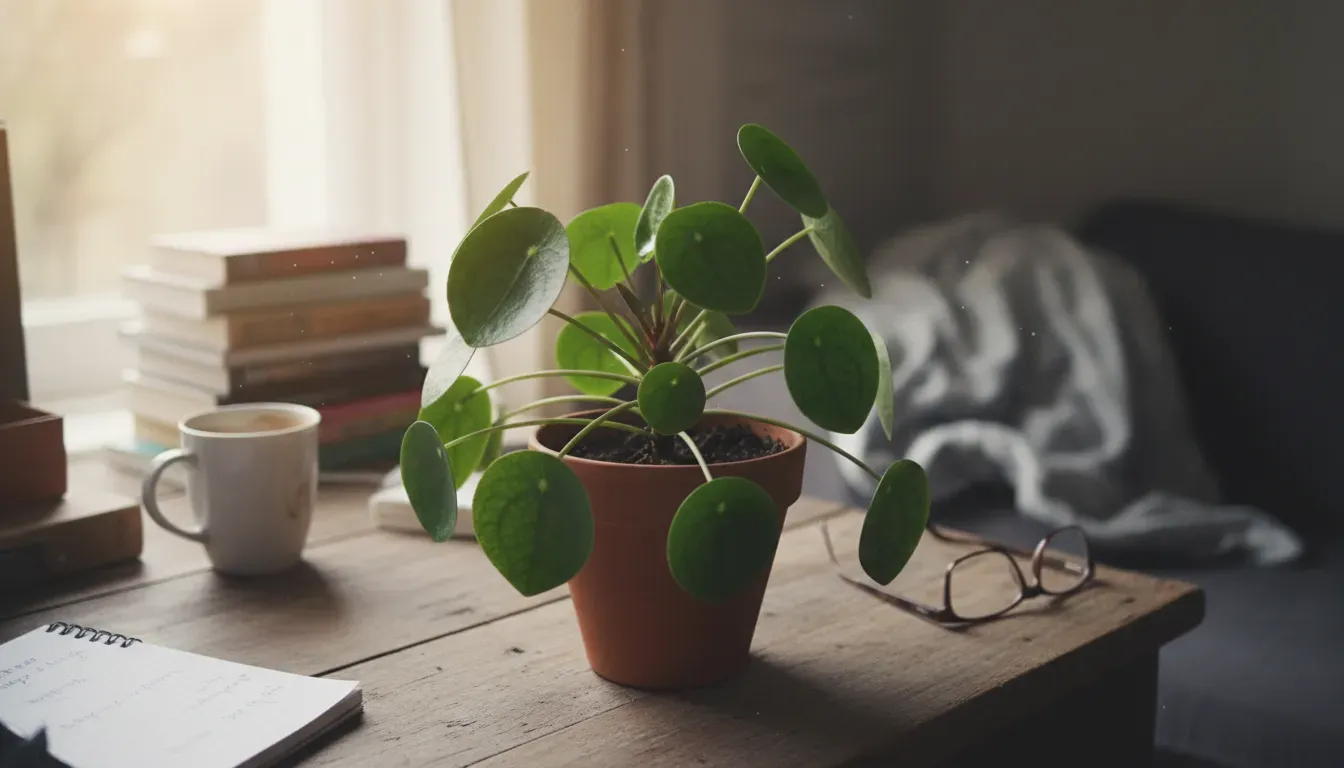
The Pilea peperomioides (Chinese Money Plant) is famous for pancake leaves on slender stems and for the pups that pop up around the mother plant. If yours leans hard one way or droops between drinks, it is usually asking for even light and a longer dry-down, not constant moisture.
Plant pros weigh in on a clear baseline: bright indirect light, water only after the mix has mostly dried, and a pot with drainage holes. Underwatering is easier to fix than wet feet on this plant.
Full plant profile: /plant/chinese-money-plant.
Quick Facts
- Difficulty: Easy
- Light: Bright Indirect
- Water: Water when the top couple of inches are dry
- Pet Safety: Safe for cats and dogs
Light Requirements
Bright, filtered light keeps the canopy full and the coin leaves generous. An east window is excellent. West light can work if heat stays mild. Soft south light a few feet back from hot glass is fine for many homes.
Pilea is strongly phototropic. It will stretch toward the brightest side of the room. Rotate the pot a quarter turn every week so the plant stays upright and balanced. Too little light means smaller leaves and leggy stems. Harsh direct sun can bleach or scorch the round pads.
Watering Schedule
Let the mix dry down before you water. Check the top two inches. If it still feels cool and damp, wait. When it feels dry, soak thoroughly until water runs from the drainage holes, then empty the saucer.
Slight droop with soft leaf tension is often a thirst signal. A drink usually firms the plant within hours. Constant wet soil leads to yellowing and root trouble. In doubt, wait another day.
Stretch intervals in winter when growth slows and indoor light is weaker.
Humidity & Temperature
Average household humidity is usually enough. This plant is easier than moisture-loving ferns. Bone-dry heat from a winter radiator can make leaves curl inward. Grouping plants or a simple pebble tray nearby is often enough.
Keep temperatures roughly 65°F to 75°F. Protect from cold drafts and sudden drops near winter glass or exterior doors.
Soil & Potting
Drainage comes first. Use a quality general-purpose potting mix with a handful of perlite or coarse sand mixed in so water moves and roots get air.
Always use a pot with drainage holes. Pilea likes a somewhat snug planter. Repot when roots crowd the holes or the plant becomes so top-heavy it tips. Spring is the best time to size up one step.
Fertilizer
Feed monthly in spring and summer with a balanced liquid fertilizer such as a 10-10-10 at the label rate or lightly diluted. Reduce or stop in winter.
Do not fertilize a plant that is soft from overwatering or freshly separated. Stabilize light and water first, then resume light feeding when growth is active.
Pruning & Maintenance
Wipe the round leaves with a damp cloth every few weeks. Dust blocks light on those flat pads. While you clean, check stems for pests and remove any yellow or damaged leaves at the base.
If the main stem gets tall and sparse, you can cut it back to encourage a fuller look and root the top section. Many growers prefer to keep the mother plant and harvest pups instead.
Propagation
Pups are the easy win. Tiny leaves appear in the soil around the main stem or along the trunk.
- Wait until a pup is about two to three inches tall.
- Cut it away with a clean knife, taking some connecting root when you can.
- Pot it in a small starter pot with airy mix and keep lightly moist until established.
Those offsets are why this plant travels so well from friend to friend.
Common Problems
Leggy stretch / tiny leaves: Light is too low. Move closer to bright indirect light and rotate weekly.
Yellowing / mushy base: Overwatering. Lengthen the dry-down and check drainage.
Curling leaves in winter: Air is too dry near heat. Group plants or move away from the radiator.
Droop that firms after watering: Normal thirst cue. Keep using soil feel instead of a strict calendar.
Pro Tips for Long-Term Maintenance
Weekly quarter-turns do as much for shape as fertilizer. Pair that habit with a dry-down watering rhythm, and harvest pups when they are a few inches tall so the mother plant stays balanced instead of crowded at the soil line.

About the Author
Silas
The Practical Greenhouse Mentor
"Silas treats the greenhouse like a workshop of practical results. After 40 years of dirty hands, he’s learned that thriving plants are the result of honest observation and small, correct moves rather than luck. He’s the neighbor who knows exactly why your Pothos is pouting and how to fix it without the fuss."