
Cathedral Window Haworthia Care
Grow Haworthia cymbiformis with bright indirect light, soak-and-dry watering, and a gritty mix that keeps the translucent leaf windows clear and firm.


Cathedral Window Haworthia
Haworthia cymbiformis
Care Level
Easy
Light
Bright Indirect
Water
Low
Humidity
Low
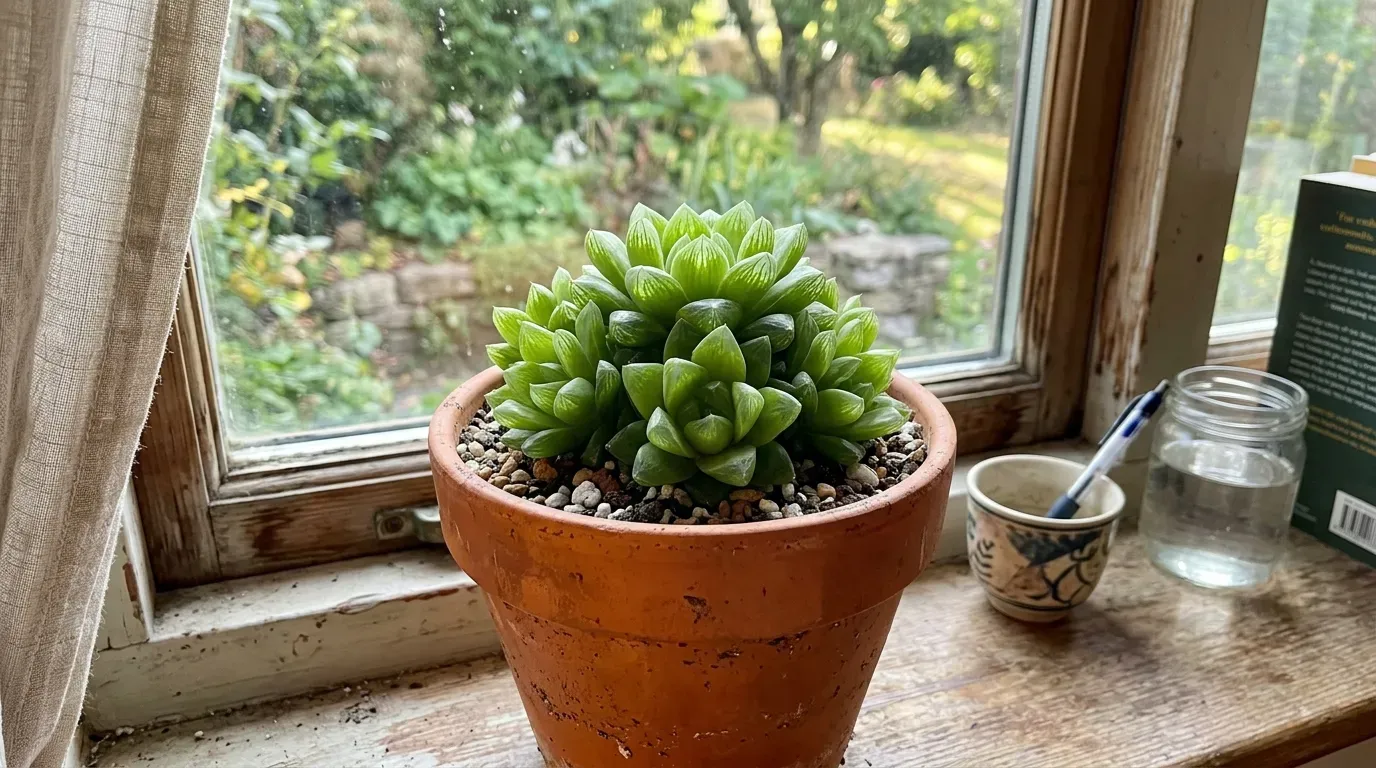
If your Cathedral Window Haworthia goes soft at the base or the translucent tips look cloudy, water sitting in the rosette or a dense mix is usually the problem. Those clear leaf tips are windows that pull light into the plant. They stay clear when the mix drains fast and the crown stays dry.
Plant pros weigh in on a simple baseline: bright filtered light, soak-and-dry watering, and grit. Keep water out of the leaf cup. This small pet-safe succulent forgives dry spells far more than wet feet.
Full plant profile: /plant/cathedral-window-haworthia/.
Quick Facts
- Difficulty: Easy
- Light: Bright Indirect
- Water: Soak thoroughly, then wait until the mix is fully dry
- Pet Safety: Safe for cats, dogs, and horses
Light Requirements
Those clear leaf tips are windows, not decoration. Indoors, that means bright indirect light, not a dark shelf and not a scorching south sill at noon.
An east window is ideal. A bright north room can work if the plant still sees open sky. South or west light is fine a few feet back from the glass, or behind a sheer curtain. Too much hard midday sun turns leaves red, white, or brown and bleaches the windows. Too little light stretches the rosette and ruins the tight form.
Rotate the pot every week or two. If the plant reaches hard toward the glass, move it closer before you change fertilizer.
Watering Schedule
Use soak and dry. Water until liquid runs from the drainage holes, empty the saucer, then wait until the mix is dry all the way through. In a warm, bright room that may be every 10 to 21 days. In cooler months, stretch the gap.
Keep water out of the leaf cup. Standing moisture in the center of the rosette is a common rot starter. Water the soil, not the crown. If droplets collect between leaves, tip the pot gently and blot with a paper towel.
Soft, wrinkled paddles usually mean thirst. Yellow, translucent, or mushy leaves at the base with a still-heavy pot mean you watered while roots were already wet. When unsure, wait three more days and weigh the pot again.
Humidity & Temperature
Low humidity is fine. This is a South African succulent, not a rainforest fern. High humidity plus cool nights slows drying and raises rot risk.
Keep temperatures roughly 65°F to 80°F for steady growth. Protect the plant below 50°F. It is not frost-hardy. Stable warmth beats constant moves.
Soil & Potting
Use a gritty, fast-draining cactus and succulent mix. A practical mix:
- One part cactus or succulent mix
- One part pumice, perlite, or coarse grit
Always use a pot with a drainage hole. A shallow terra cotta pot suits the small root system and helps the mix dry. Repot every two to three years in spring, or when the mix breaks down and stays wet too long. Bump only one pot size.
After repotting, wait several days before the first thorough watering so any scuffed roots can seal.
Fertilizer
Feed lightly in spring and summer only. A cactus and succulent liquid fertilizer diluted to half strength every four to six weeks is enough.
Skip fertilizer in fall and winter. If you see a white crust on the mix, flush with plain water until it runs clear, then return to a dry cycle. Do not fertilize a soft, stressed, or freshly divided plant.
Pruning & Maintenance
Little pruning is needed. Pull spent flower stalks at the base once they dry. Remove mushy or damaged leaves by twisting them gently from the base when the plant is dry.
Dust the translucent tips with a soft brush so light can enter the windows. While you clean, check leaf joints for mealybugs. Keep the shallow pot where paws will not tip it.
Propagation
Offsets are the easiest method. When a pup has a few roots of its own, twist or cut it free with a clean blade. Let the wound callus for a day or two, then pot it in dry grit. Wait about a week before the first light watering.
Leaf cuttings can work but are slower. Seeds are possible, but offset division gets you a matching plant faster. Callus first, roots second.
Common Problems
Root or crown rot: Mushy, translucent leaves after wet soil or water sitting in the rosette. Cut away soft tissue, let wounds dry, and restart in dry grit with longer gaps between waterings.
Etiolation: Stretched, open rosette from weak light. Move to a brighter filtered window.
Sun stress scorch: Red, white, or brown patches from hard midday sun. Pull back from the glass or add a sheer.
Mealybugs: White cotton in leaf joints. Dab with isopropyl alcohol on a swab, isolate the plant, and recheck for two weeks.
Wrinkled leaves over dry mix: Usually underwatering. Give a thorough soak, then return to soak-and-dry.
Pro Tips for Long-Term Maintenance
If the windows on your Cathedral Window Haworthia look cloudy or dull, do not drown the plant to clear them up. Wipe dust, confirm the mix drains, and move the pot into stronger filtered light. Clear tips come from clean surfaces and healthy tissue, not from a wetter schedule.

About the Author
Silas
The Practical Greenhouse Mentor
"Silas treats the greenhouse like a workshop of practical results. After 40 years of dirty hands, he’s learned that thriving plants are the result of honest observation and small, correct moves rather than luck. He’s the neighbor who knows exactly why your Pothos is pouting and how to fix it without the fuss."