
Brown Leaf Troubleshooting
Decode crispy tips, parchment edges, mushy spots, and whole-leaf browning so you can fix humidity, watering, and root issues instead of guessing.

A brown leaf is a message, not an automatic failure. Crispy tips, parchment edges, mushy spots, and one tired lower leaf each point to different conditions. Panic snipping before you read the texture often removes the clue you needed.
Plant pros weigh in on a useful baseline: match the brown pattern to humidity, watering, roots, or normal aging first. Fix the environment, then decide what to trim.
Quick Reference
- Crispy tips: Dry air or mineral buildup at the leaf ends
- Parchment edges: Soil stayed dry too long, or water is shedding off hydrophobic mix
- Mushy dark spots: Overwatering or early root rot
- One lower leaf: Often natural aging; many leaves at once usually means shock
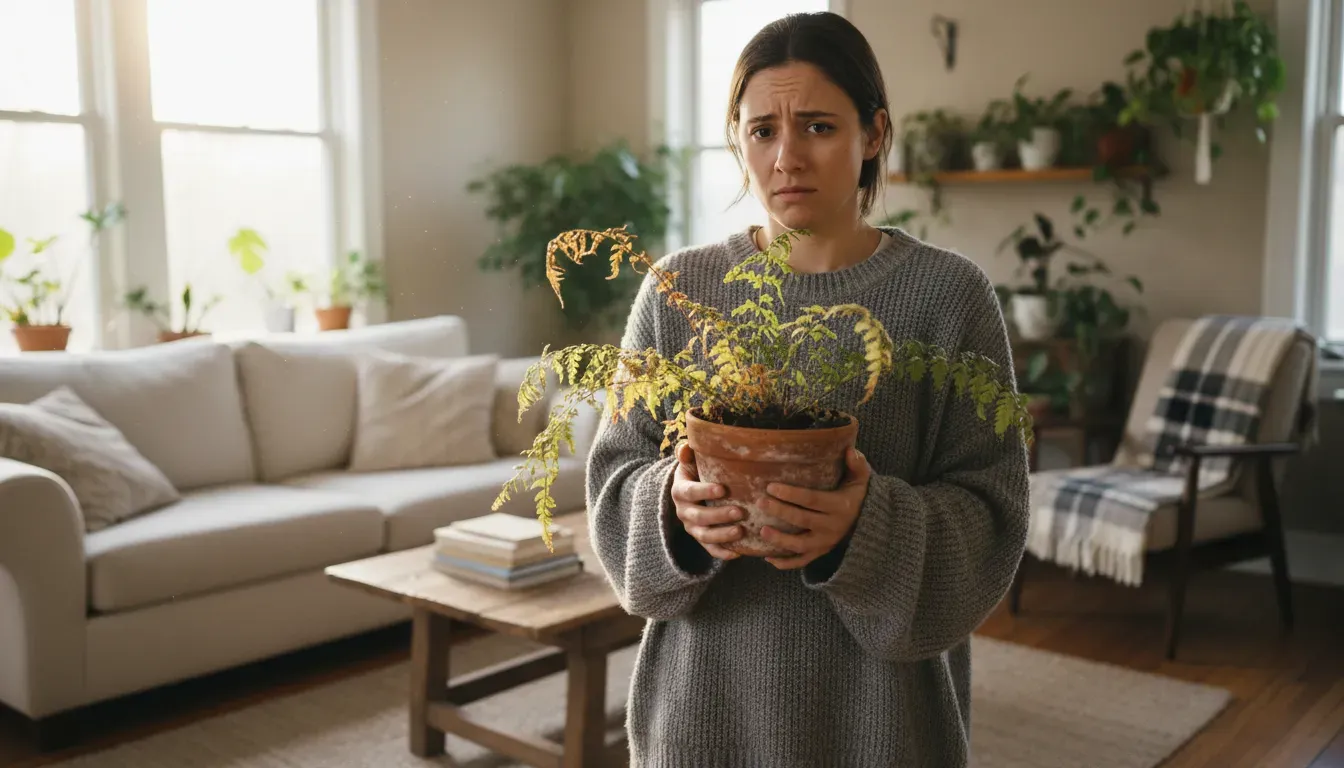
Crispy Brown Tips
This is the classic complaint on spider plants, ferns, and calatheas. Dry indoor air pulls moisture from leaf tips faster than roots can replace it, especially in winter heat.
Boost humidity by grouping plants or using a humidifier. A pebble tray can help a little around a single pot. Also check your water. Fluoride and other minerals in tap water can accumulate at tips and burn tissue. Rainwater or distilled water often improves new growth even if old tips stay brown.
Old burned tips will not turn green again. Aim the fix at the next flush of leaves.
Dry, Paper-Like Edges
If outer edges curl and feel like old parchment, the plant is dehydrated. Either the mix stayed dry too long, or it went hydrophobic: water runs down the pot wall and never soaks the root ball.
Give it a deep soak. Set the pot in a sink with a few inches of water and let it drink from the bottom for about 30 minutes so the whole root ball rehydrates. Then return to a steadier watering rhythm based on soil feel, not the calendar.
Dark, Mushy Brown Spots
Soft brown patches, especially with a yellow halo, deserve quick attention. They often signal overwatering or the start of root rot. Roots sitting in stagnant water cannot support leaves, and fungal issues move fast in still, wet mix.
Stop watering. Check the roots. Black, slimy roots need trimming back to firm tissue, then a repot into fresh, well-draining mix with drainage holes. Improve air flow around the plant. A small fan on low can help dry the leaf surface and reduce fungal pressure.
Entire Leaf Browning
A single lower leaf that slowly yellows, then browns, is often natural aging. The plant sheds old growth to support new leaves higher up.
Many leaves browning at once usually means shock: a sudden temperature drop, a hard move, or a severe light shortage. Check for drafts, recent relocating, and whether the plant still sees enough bright filtered light for its type.
To Snip or Not to Snip
For looks, you can trim brown tips. Follow the natural leaf shape and leave a thin sliver of brown so you do not cut into living green tissue, which can trigger more browning.
If a leaf is more than about half brown, it is doing little photosynthesis and costs the plant energy. Remove it with clean, sharp shears at the base of the stem or petiole. Always clean tools between plants when disease is possible.
Pro Tips for Long-Term Maintenance
Read texture before you reach for scissors. Crispy points to air or minerals, parchment points to underwatering or hydrophobic soil, and mush points to wet roots. Fix that condition first, then tidy the foliage. New growth is the real report card on whether the environment is back on track.

About the Author
Silas
The Practical Greenhouse Mentor
"Silas treats the greenhouse like a workshop of practical results. After 40 years of dirty hands, he’s learned that thriving plants are the result of honest observation and small, correct moves rather than luck. He’s the neighbor who knows exactly why your Pothos is pouting and how to fix it without the fuss."