
Bromeliad Care
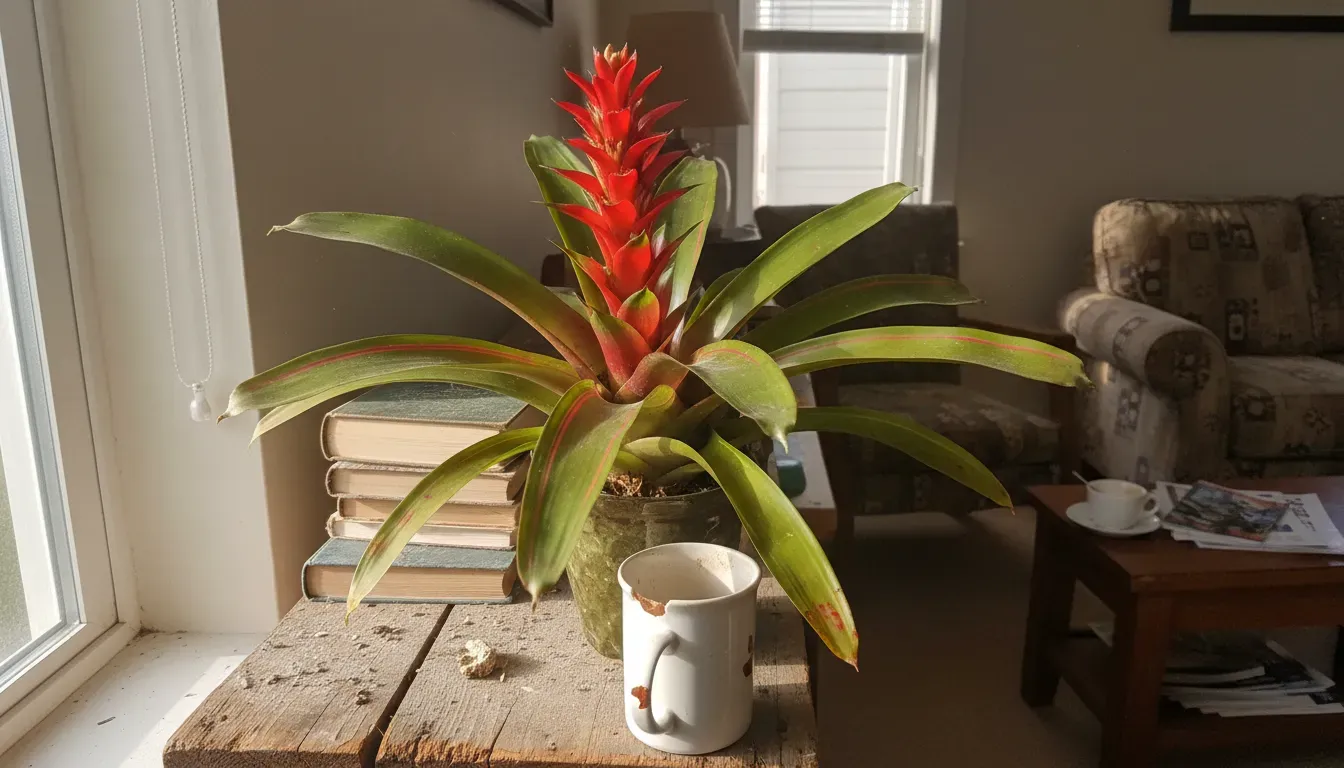
Grow tank bromeliads with bright filtered light, fresh water in the central cup, an airy bark mix, and pup separation when the mother plant finishes its bloom.


Bromeliad
Bromeliaceae
Care Level
Easy
Light
Bright Indirect
Water
Moderate
Humidity
High
Bromeliads (Bromeliaceae) look like living architecture: stiff rosettes, long-lasting color, and often a central cup that catches water the way rainforest plants catch rain. If the cup turns murky or the base goes soft, the plant is telling you the reservoir or the soil stayed wrong for too long.
Plant pros weigh in on a simple baseline for common tank types: bright filtered light, fresh water in the cup, barely moist airy mix around the roots, and patience through a one-bloom lifecycle that ends with pups.
Full plant profile: /plant/bromeliad.
Quick Facts
- Difficulty: Easy
- Light: Bright Indirect
- Water: Keep the central cup filled with fresh water; keep soil only lightly moist
- Pet Safety: Most common household bromeliads are non-toxic; watch sharp leaf edges
Light Requirements
In the wild, many bromeliads live under dappled canopy light. At home, bright indirect light is the goal. A window with a sheer curtain is a strong default.
Brown scorched patches mean too much direct sun. Dull, dark green foliage with weak blooming or few pups usually means the plant needs more light. Leaf color is a useful energy signal: richer patterning and stronger growth show up when the plant sees enough open sky without hot glass.
Watering Schedule
For tank bromeliads, the central cup is the main reservoir. Keep it filled with fresh water. Once a week, tip the plant gently, dump the old water, and refill. Stagnant, murky, or smelly water invites bacteria and crown trouble.
Use rainwater, distilled water, or filtered water when you can. Many bromeliads are sensitive to minerals and chemicals in hard tap water.
While the cup stays full, keep the soil only barely moist. Overwatering the mix rots the small root system fast. Empty saucers and never leave the planter sitting in a puddle.
Humidity & Temperature
These are tropical plants that appreciate higher humidity and steady warmth. Average homes can work if the cup stays fresh and the plant is not blasted by dry vents.
Aim for roughly 65°F to 80°F. Protect from cold drafts and sudden temperature swings. Good air movement around the rosette helps more than crowding the plant into a dead corner.
Soil & Potting
Many bromeliads are epiphytes or behave like them in pots. Use a loose, airy mix such as orchid bark blended with peat moss and perlite. Dense houseplant soil holds water against the base and invites rot.
Always choose a pot with drainage holes. Repot mainly when the mix breaks down or when you are separating pups. Snug pots are fine; the plant is not looking for a huge soil volume.
Fertilizer
Bromeliads are light feeders. During spring and summer, use a balanced water-soluble fertilizer diluted to about one-quarter strength once a month. Spray or mist the diluted feed onto the leaves and into the cup rather than soaking the soil.
Skip heavy feeding in winter. Do not fertilize a plant with crown rot or a filthy cup. Clean the reservoir and stabilize water habits first.
Pruning & Maintenance
Remove spent flower spikes once they fade and dry. Trim damaged leaf tips if needed, following the natural leaf shape.
Keep the cup clean. Dump and refill on a weekly rhythm. Wipe dust from stiff leaves so light can reach the surface. Give the plant space for air flow instead of tucking it into a tight, stagnant corner.
Propagation
Most bromeliads bloom once, then decline while they raise pups at the base. That decline is expected, not a failure.
- Wait until pups are about one-third to one-half the size of the mother plant.
- Cut a pup away with a clean, sharp knife, ideally with some roots attached.
- Pot the pup in airy bromeliad or orchid mix and keep it lightly moist while it establishes.
Leave pups attached longer if you want a fuller cluster around the fading mother.
Common Problems
Brown leaf tips: Dry air or salt buildup from tap water. Raise humidity and switch to cleaner water.
Crown or base rot: Black, soggy tissue from overwatered soil or a dirty cup. Prevention matters; advanced rot is often fatal.
Dull foliage / no pups: Light is too low. Move to brighter filtered exposure.
Scorched patches: Too much direct sun. Add a sheer or pull back from hot glass.
Pro Tips for Long-Term Maintenance
Treat the cup like a tiny aquarium you refresh weekly, not a vase you top off forever. Fresh water in the reservoir plus barely moist, airy mix around the roots is the habit that keeps tank bromeliads stable through bloom and pup season.

About the Author
Silas
The Practical Greenhouse Mentor
"Silas treats the greenhouse like a workshop of practical results. After 40 years of dirty hands, he’s learned that thriving plants are the result of honest observation and small, correct moves rather than luck. He’s the neighbor who knows exactly why your Pothos is pouting and how to fix it without the fuss."