
Boston Fern Care
Keep Nephrolepis exaltata lush with bright indirect light, consistent moisture, high humidity, and a pot that drains well so fronds stay soft instead of crispy.


Boston Fern
Nephrolepis exaltata
Care Level
Moderate
Light
Bright Indirect
Water
High
Humidity
High
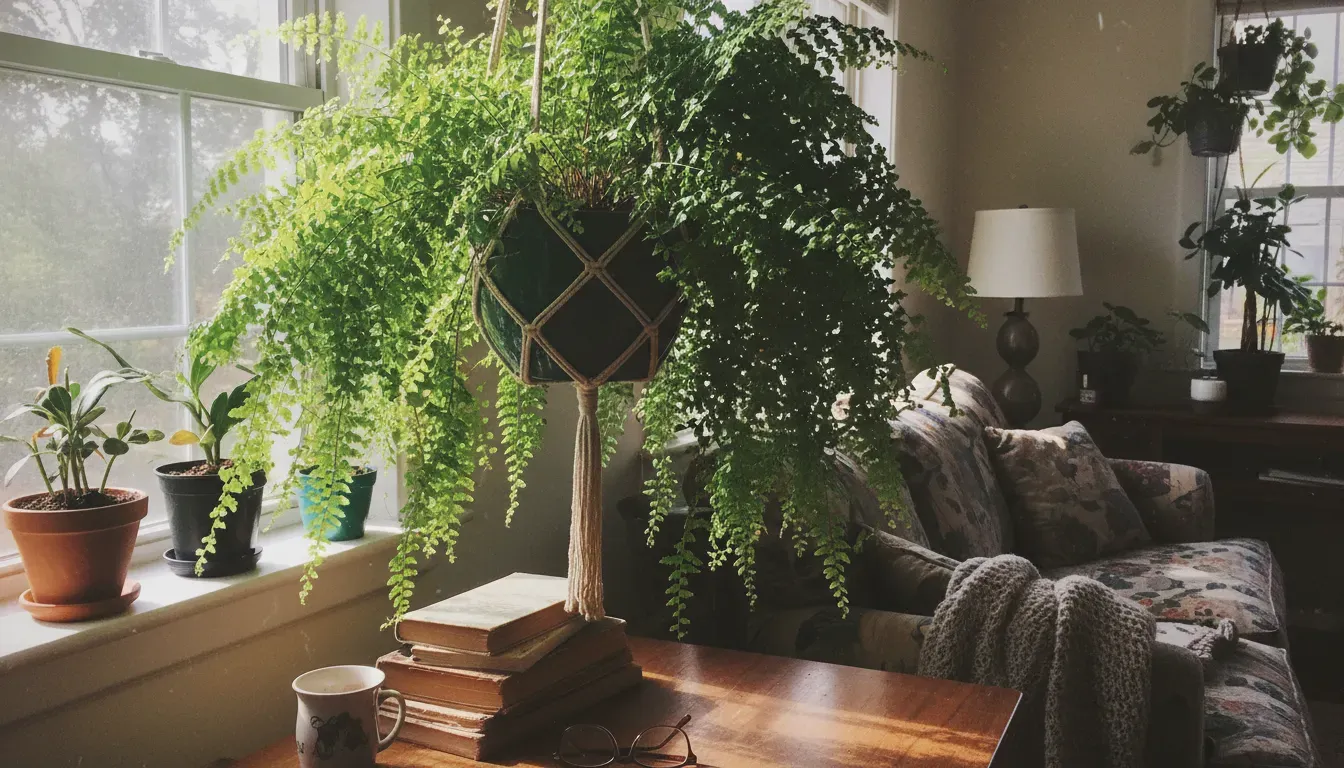
The Nephrolepis exaltata (Boston Fern) looks like a soft green fountain until the air dries out or the soil goes bone-dry once. Crispy leaflet drop and brown frond tips are the usual warning signs in heated rooms.
Plant pros weigh in clearly: this fern wants high humidity, even moisture, and bright, filtered light. It is not a set-and-forget plant, but a steady watering and humidity habit keeps those feathery fronds full.
Full plant profile: /plant/boston-fern.
Quick Facts
- Difficulty: Moderate
- Light: Bright Indirect
- Water: Keep the mix evenly moist; do not let it dry out fully
- Pet Safety: Safe for cats, dogs, and horses
Light Requirements
Think forest floor: bright light broken by canopy, not hot afternoon sun. A north or east-facing window is usually ideal. Soft west light a few feet back from the glass can work if the fronds stay cool.
Direct afternoon sun scorches paper-thin fronds fast and turns them crispy brown. Too little light leaves the plant sparse and slow to push new growth. If fronds look bleached or washed out, pull the plant back from hard sky exposure. If growth stalls and the crown thins, move it closer to brighter filtered light.
Watering Schedule
Boston Ferns dislike going dry, even once. Check the surface often. When the top of the mix starts to lose its damp feel, water thoroughly at the sink until liquid runs from the drainage holes, then let the pot drain fully before you return it to its saucer.
They love moisture, but they still hate sitting in a puddle. Empty standing water. Yellow lower fronds with soft stems often mean the mix stayed too wet. A limp, grayish plant usually means it dried too hard and needs a deep soak.
In winter, keep the rhythm but watch room heat. Dry air and faster surface drying can trick you into underwatering the core while misting the tips.
Humidity & Temperature
Humidity is the priority. Aim for about 60% or higher when you can. Dry winter heat drops tiny leaflets all over the floor.
Misting helps for minutes, then fades. A dedicated humidifier, a plant group, or a bright bathroom with shower steam does more lasting work. Brown, crunchy frond tips are a classic dry-air signal.
Keep temperatures in a comfortable indoor range, roughly 60°F to 75°F. Protect the plant from heater blasts and icy drafts that dry one side of the crown.
Soil & Potting
Use a peat-based potting mix with plenty of perlite or vermiculite so it holds moisture without turning dense and compacted. Roots need both water and air.
Choose a planter with real drainage holes. Boston Ferns often like to feel a bit snug. Repot when you are watering every day just to stop wilt, or when roots crowd the pot. Spring is the best time to bump up one size.
Fertilizer
Feed once a month in spring and summer with a balanced liquid houseplant fertilizer diluted to half strength. Hold fertilizer in winter when growth slows.
Do not fertilize a dry, crispy, or freshly stressed plant. Restore moisture and humidity first, then resume light feeding when new fronds appear.
Pruning & Maintenance
Older lower fronds yellow and brown as the plant grows. Snip them off close to the soil with clean shears. That keeps the crown tidy and improves air flow through the center, which helps prevent rot.
Dust gathers on feathery fronds. Every few weeks, give the plant a gentle room-temperature shower rinse, then drain thoroughly. Clean fronds take light better and look fuller.
Propagation
Division is the reliable method. In spring, slip the plant from its pot and separate the root ball into sections that each have healthy fronds and roots. Pot each piece in moist, airy fern mix and keep humidity high while it settles.
You can also pin or pot runners (stolons) that emerge from the base once they show small plantlets. Keep the mix lightly moist until roots take hold.
Common Problems
Crispy brown tips / leaflet drop: Air is too dry, or the mix dried hard. Raise humidity and keep moisture more even.
Yellow soft lower fronds: Overwatering or poor drainage. Empty saucers and check that the mix drains.
Sparse growth: Light is too low. Move closer to bright indirect light.
Scale or mealybugs: Wipe fronds, isolate if needed, and treat early before pests hide in dense crowns.
Pro Tips for Long-Term Maintenance
Treat humidity as part of watering, not an optional extra. If tips keep crisping while the pot feels moist, fix the air first with a humidifier or a steamy bathroom spot, then keep the daily soil check. Consistency beats occasional deep rescues.

About the Author
Silas
The Practical Greenhouse Mentor
"Silas treats the greenhouse like a workshop of practical results. After 40 years of dirty hands, he’s learned that thriving plants are the result of honest observation and small, correct moves rather than luck. He’s the neighbor who knows exactly why your Pothos is pouting and how to fix it without the fuss."