
Boob Cactus Care
Grow Myrtillocactus geometrizans 'Fukurokuryuzinboku' with hard light, a soak-and-dry watering rhythm, and a gritty mineral mix that never stays wet.


Boob Cactus (Fukurokuryuzinboku)
Myrtillocactus geometrizans 'Fukurokuryuzinboku'
Care Level
Easy
Light
Full Sun
Water
Low
Humidity
Low
The Myrtillocactus geometrizans ‘Fukurokuryuzinboku’ (Boob Cactus) is a slow, sculptural cactus with blue-green tubercles and minimal spines. If yours looks stretched or soft at the base, the fix is almost always light and drainage, not a wetter schedule.
Plant pros weigh in the same way: give it the brightest window you have, a mineral mix that drains in seconds, and long dry spells between drinks. Treat winter as a rest, not a wet season.
Full plant profile: /plant/boob-cactus-fukurokuryuzinboku.
Quick Facts
- Difficulty: Easy
- Light: Full sun or the brightest indoor exposure you can give
- Water: Soak thoroughly, then wait until the mix is fully dry
- Pet Safety: Non-toxic if nibbled, but spines can still poke mouths and paws
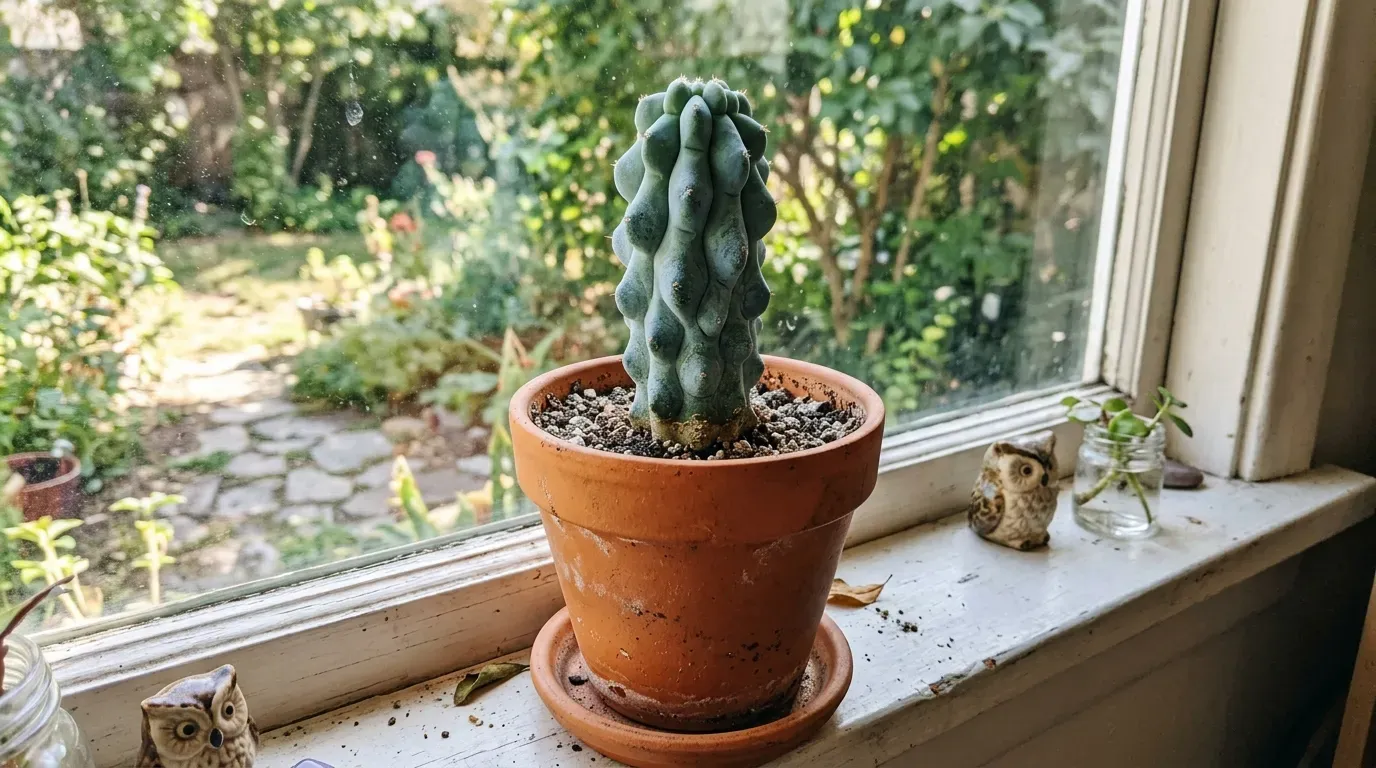
Light Requirements
This cactus builds its blue color and tight form from hard light. Indoors, a south-facing window is the best default. East can work if the plant sits tight against the glass and still sees open sky. North rooms usually make it stretch and fade toward plain green.
That glaucous blue acts like a sunscreen. Without enough light, the plant spends energy reaching instead of thickening. Rotate the pot every week or two so one face does not bleach while the other stays shaded.
If you move it outdoors for summer, ease it into direct sun over a week. Sudden full sun after a dim indoor winter can scorch soft tissue. Bring it back inside before nights drop near 50°F. Cold plus wet soil is a fast way to lose roots.
Watering Schedule
Use soak and dry. Water until liquid runs from the drainage holes, empty the saucer, then wait. The mix should feel dry all the way through before the next drink. In a warm, bright room that might be every 10 to 21 days. In cooler months, stretch to once a month or longer.
Look at the plant, not the calendar. Soft, wrinkled tubercles usually mean it is thirsty. A mushy base or yellowing with a still-heavy pot means you watered while the roots were already wet. When unsure, wait three more days and weigh the pot again. A light pot is ready. A heavy pot is not.
Winter rest matters. Growth slows, and the plant wants cool, bright, and dry. Extra water in dormancy sits in the mineral mix and invites rot. Keep it on the dry side until spring growth resumes.
Humidity & Temperature
Low humidity is fine. This is a desert-leaning cactus, not a rainforest epiphyte. High humidity plus cool nights is the risk, because moisture hangs on the skin and in the pot.
Aim for daytime temperatures roughly 65°F to 85°F. Keep it above 50°F. Protect it from heater blasts that cook one side of the pot, and from drafty winter glass that chills the roots while the room feels warm.
Good air movement helps more than misting. Mist is the wrong tool here. Dry air and fast drainage keep the tubercles firm.
Soil & Potting
Use a highly porous, mineral-heavy mix. A practical recipe:
- One part cactus potting mix
- One part pumice, coarse grit, or perlite
You want water to exit fast and leave air pockets around the roots. Dense indoor soil holds water against the stem base and turns a tough plant into a soft one.
Choose a pot with a real drainage hole. Terra cotta helps the mix dry and anchors a top-heavy column as it ages. Repot every two to three years in spring, or when the mix breaks down and stays wet too long. Bump only one pot size. Extra unused mix stays damp and does not help growth.
After repotting, wait several days before the first thorough watering so any scuffed roots can seal.
Fertilizer
Feed lightly in spring and summer only. A water-soluble cactus fertilizer once a month at the label rate is enough for most indoor plants. Dilute if your mix is fresh and the plant is still settling.
Skip fertilizer in fall and winter. Pushing nutrients into a resting cactus builds salts and does not create faster blue skin. If you see a white crust on the mix, flush with plain water until it runs clear, then return to a dry cycle.
Do not fertilize a soft, stressed, or freshly cut plant. Fix light and water first.
Pruning & Maintenance
This cultivar grows slowly, so hard pruning is rare. Remove damaged or rotting sections with a clean, sharp blade. Let cuts dry and callus in open air before the plant sees water again.
Dust the skin occasionally with a soft brush so light can reach the surface. Check the ribs and hidden creases for cottony mealybugs while you clean. Catching pests early is easier than scrubbing a full infestation out of every tubercle.
Wear gloves if spines bother you. Most forms are milder than desert barrels, but small spines still catch skin and fabric.
Propagation
Stem cuttings are the reliable method. In warm months, cut a healthy section with a clean blade. Set the cutting in a dry, shaded spot for several days until the cut end calluses. Then stand it in dry gritty mix. Do not water for another week or more. Roots form from a sealed wound, not a wet one.
Keep the cutting in bright light without harsh midday scorch while it roots. A slight tug resistance later means roots have grabbed. Then begin light soak-and-dry watering.
Crested forms follow the same logic. Give them time. Slow growth above the soil usually means slow roots below it.
Common Problems
Root or stem rot: Soft, dark tissue and collapse after wet soil. Cut away mush to firm tissue, let wounds callus, and restart in dry grit with less frequent water.
Etiolation: Thin, stretched growth and loss of blue color from weak light. Move closer to a bright window before you change fertilizer.
Mealybugs: White cotton in creases. Dab with isopropyl alcohol on a swab, isolate the plant, and repeat checks for two weeks.
Cold damage: Pale, translucent patches after near-freezing nights. Keep the plant warm and dry while it shows you what tissue will recover.
Pet poking: Non-toxic does not mean painless. Place it where curious noses cannot press into spines.
Pro Tips for Long-Term Maintenance
If the blue looks chalky and dull after a long winter indoors, do not drown it to wake it up. Give it harder light first, keep the mix dry until the pot feels light, then resume normal soak-and-dry. Color and firmness come from light and air around the roots, not from a wetter schedule.

About the Author
Silas
The Practical Greenhouse Mentor
"Silas treats the greenhouse like a workshop of practical results. After 40 years of dirty hands, he’s learned that thriving plants are the result of honest observation and small, correct moves rather than luck. He’s the neighbor who knows exactly why your Pothos is pouting and how to fix it without the fuss."