
Bird of Paradise Care
Grow Strelitzia indoors with strong sun, deep watering after the top soil dries, sturdy potting, and patience for blooms that need age plus intense light.


Bird of Paradise
Strelitzia reginae
Care Level
Moderate
Light
Full Sun
Water
Moderate
Humidity
Moderate
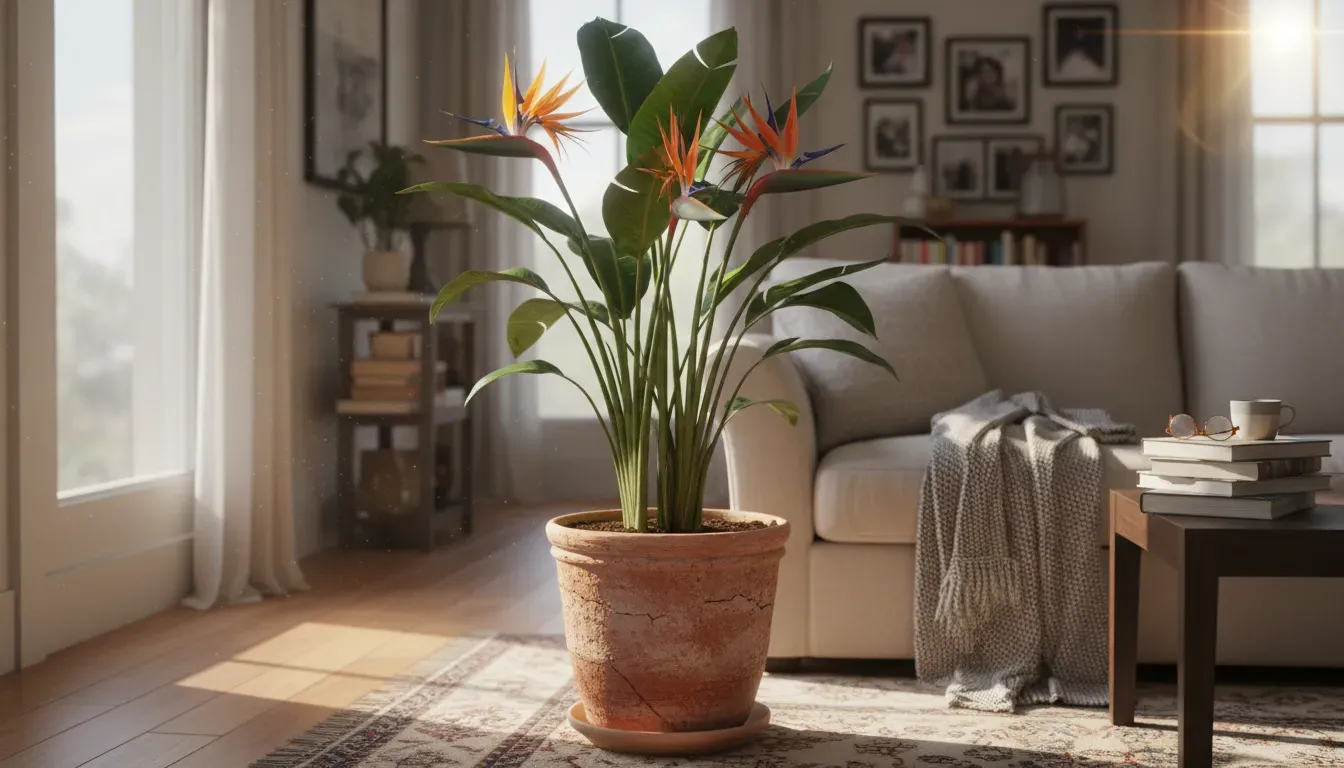
If your Bird of Paradise sulks in a dim corner, it is not being dramatic for fun. Strelitzia reginae is a sun-hungry statement plant. Weak light means smaller leaves, lean, and almost no chance of those orange and blue blooms.
Plant pros weigh in on the baseline: as much bright light as you can give (including some direct sun), deep watering after the top few inches dry, a sturdy pot with drainage holes, and years of maturity before you expect flowers. Give it space and sun first.
Quick Facts
- Difficulty: Moderate
- Light: Full Sun to very bright light
- Water: Water when the top 2–3 inches feel dry
- Pet Safety: Mildly toxic to cats and dogs
Light Requirements
A south or west window with at least six hours of bright light is the indoor ideal. Some direct afternoon sun fuels those oversized leaves.
If new leaves come in smaller than older ones, or stems stretch and lean hard toward the glass, move the plant closer to the sun before you fertilize. Dark corners are the wrong home for this species.
Watering Schedule
Keep the plant more hydrated than a desert succulent, but never leave it in a puddle. Wait until the top two or three inches feel dry, then soak until water runs from the drainage holes and dump the saucer.
In summer that often means about weekly. In winter, stretch toward every two weeks depending on light and heat. Leaves curling inward usually mean thirst. Soft yellowing lower leaves with wet soil usually mean too much water.
Humidity & Temperature
Temperatures between 65°F and 85°F suit it well. It is not frost-hardy, so keep it off drafty winter doors and icy glass.
It tolerates average home air better than ferns, but very dry rooms still crisp leaf edges. Group with other tropicals or run a humidifier if tips brown despite good watering.
Soil & Potting
Thick roots store water and nutrients and prefer a snug pot. Upsize only when roots push the plant up, circle heavily, or crack the container.
Use a well-draining, peat-based potting mix and a heavy ceramic or stone planter so top-heavy growth does not tip. Large drainage holes are non-negotiable. Fresh mix at repotting beats constant fertilizer for stalled plants.
Fertilizer
Feed in spring and summer with a balanced liquid fertilizer at half to full strength every two to four weeks while the plant is pushing leaves. Hold fertilizer in fall and winter.
Bloom failure is more often light and age than missing fertilizer. Do not blast a shady plant with extra feed expecting flowers.
Pruning & Maintenance
Wipe large leaves front and back monthly with a damp cloth. Dust blocks light, and cleaning lets you spot scale or mealybugs early.
Horizontal splits in the leaves are normal. In the wild, those slits help wind pass through without snapping the stem. They are not automatic proof of poor care.
Remove fully brown or collapsed leaves at the base with clean shears.
Propagation
Division of mature clumps at repotting is the home method. Separate fans with roots attached, pot into fresh mix, and keep evenly moist while new growth establishes. Expect slower growth while divisions settle.
Common Problems
No flowers: Usually age (often four to five years) plus insufficient intense light. Move to a sunnier spot and wait for maturity.
Curling leaves: Thirst or very dry air. Water deeply and check humidity.
Yellow soft lower leaves: Overwatering. Lengthen dry-down and empty saucers.
Brown crispy edges: Dry air or inconsistent watering. Stabilize both.
Pests: Scale and mealybugs hide on midribs and leaf undersides. Wipe and treat early.
Pro Tips for Long-Term Maintenance
Wipe every leaf on a monthly schedule and rotate the pot so both sides get sun. That cleaning pass doubles as pest patrol, and even light keeps the plant from becoming a permanent lean toward one window.

About the Author
Silas
The Practical Greenhouse Mentor
"Silas treats the greenhouse like a workshop of practical results. After 40 years of dirty hands, he’s learned that thriving plants are the result of honest observation and small, correct moves rather than luck. He’s the neighbor who knows exactly why your Pothos is pouting and how to fix it without the fuss."