
Anthurium crystallinum Care
Keep Crystal Anthurium's velvet leaves and silver veins healthy with soft filtered light, high humidity, chunky aroid mix, and careful watering by pot weight.


Anthurium
Anthurium andraeanum
Care Level
Moderate
Light
Bright Indirect
Water
Moderate
Humidity
High
If the velvet on your Anthurium crystallinum turns brittle at the edges, the air is usually too dry or the light is too hard. This Crystal Anthurium wants thick humidity and soft brightness, not a sunny windowsill bake.
Plant pros weigh in on the baseline: bright indirect light with an emphasis on indirect, humidity near 70% when you can manage it, and a chunky mix that stays lightly damp while roots still breathe. Fix the air and the drainage first.
Quick Facts
- Difficulty: Moderate to Difficult
- Light: Bright Indirect (soft, no hot sun)
- Water: Water when the pot feels light or the top 2 inches feel like a wrung-out sponge
- Pet Safety: Toxic to cats and dogs
Light Requirements
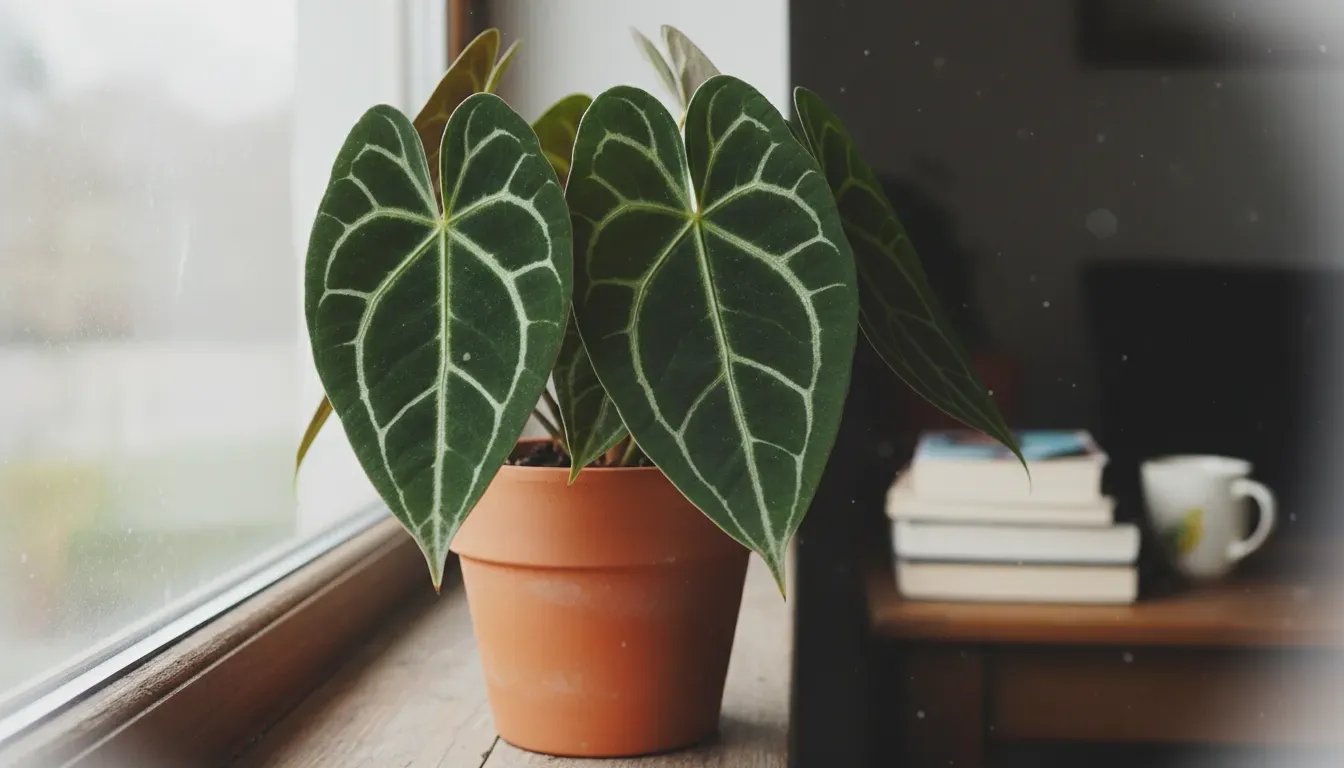
Velvety leaves are built to catch filtered canopy light. Give bright indirect light a few feet back from an east window, or behind a sheer on stronger exposures.
South glass without a buffer can scorch silver veins into brown paper in one hard afternoon. If leaves look washed out, the plant may need more filtered brightness, not direct sun. Happy foliage stays deep and plush in tone.
Watering Schedule
Thick, fleshy roots like a damp-but-airy rhythm. Lift the pot: heavy means wait, light means water. Or check two inches down. A wrung-out sponge feel is the target, not a swamp and not bone-dry dust.
Water thoroughly at the sink with lukewarm water until it drains completely, then return the pot to a dry saucer. Chronically saturated mix turns those noodle-like roots to mush before the leaves always show a clear warning.
Humidity & Temperature
Aim for about 70% humidity or higher when possible. Typical winter homes near 30% pull moisture from velvet leaves and leave edges brown, brittle, and curled.
Use a dedicated humidifier or group with other large-leaved plants. Do not mist the velvet. Water sitting on foliage in still air invites bacterial spotting. Keep temperatures warm and stable, in the usual tropical houseplant range, away from drafts.
Soil & Potting
Treat it like an epiphyte. Use an airy aroid mix: one part quality potting soil, one part orchid bark, and one part perlite or pumice, plus a handful of horticultural charcoal if you have it.
Water poured on top should exit the drainage holes within seconds. Clear nursery pots inside a cachepot help you watch for healthy white root tips without constant unpotting. Repot when roots fill the container or the mix breaks down.
Fertilizer
Feed lightly in spring and summer with a balanced liquid fertilizer at half strength every four to six weeks. Hold fertilizer in fall and winter.
Salt buildup burns leaf edges on these sensitive roots. If you see crust on the soil, flush and pause feeding. Fertilizer will not replace humidity or light.
Pruning & Maintenance
Every couple of weeks, whisk dust off the velvet with a soft, dry paintbrush. Dust dulls the silver veins and blocks light. While you brush, check for pests.
As stems get heavier, add a simple stake or moss pole for support. Cut spent yellow or brown basal leaves near the soil line with a clean blade so the plant focuses on new growth.
Propagation
Division at repotting is the most practical home method. Separate offsets that already have roots, pot into fresh chunky mix, and keep warm and highly humid until new leaves push.
Stem sections with a node can root under high humidity for experienced growers, but division is the lower-risk path for a prized crystallinum.
Common Problems
Brown curling edges: Dry air. Raise humidity; do not mist velvet.
Root rot: Mix stays wet. Refresh into barky soil and lengthen intervals.
Scorched veins or papery patches: Too much direct sun. Soften the light.
Dull, dusty look: Blocked light. Brush leaves gently on a schedule.
Toxicity: Calcium oxalate crystals. Keep away from pets and children.
Pro Tips for Long-Term Maintenance
Make humidity and leaf dusting weekly habits, not emergency fixes. A stable humidifier nearby plus a soft brush pass keeps the velvet plush and makes pest checks automatic before mites get ahead of you.

About the Author
Silas
The Practical Greenhouse Mentor
"Silas treats the greenhouse like a workshop of practical results. After 40 years of dirty hands, he’s learned that thriving plants are the result of honest observation and small, correct moves rather than luck. He’s the neighbor who knows exactly why your Pothos is pouting and how to fix it without the fuss."