
Alocasia Care
Grow dramatic Elephant Ears with bright filtered light, evenly moist chunky soil, high humidity, and calm acceptance of winter dormancy when growth pauses.


Alocasia
Alocasia spp.
Care Level
Moderate
Light
Bright Indirect
Water
Moderate
Humidity
High
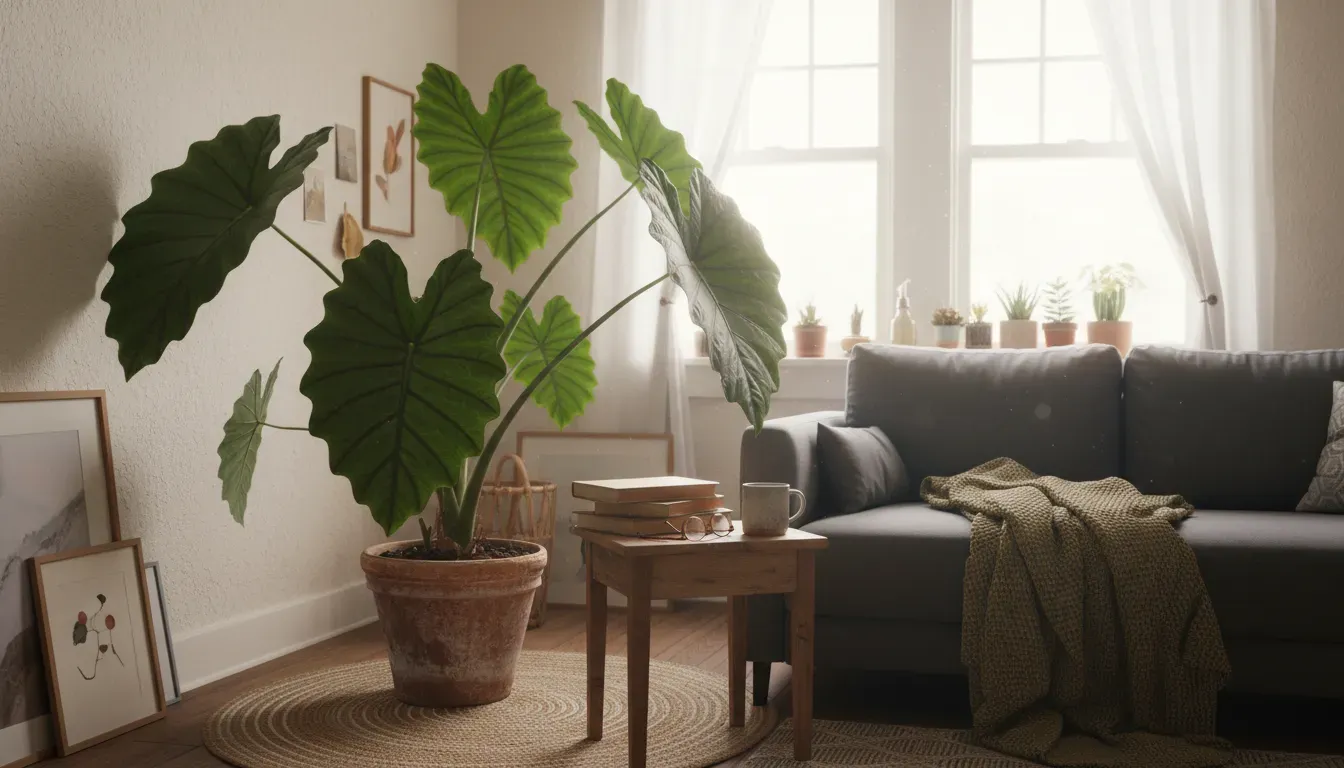
The Alocasia (Elephant Ear) can look prehistoric and then drop every leaf overnight. That drama is often dry air, wet feet, or a normal winter nap, not a failed plant.
Plant pros weigh in on the baseline: bright filtered light, soil that stays lightly moist with drainage holes, humidity near 60% or higher, and patience if the plant retreats into its rhizome for winter. Provide the environment, then stop panicking.
Quick Facts
- Difficulty: Moderate
- Light: Bright Indirect
- Water: Water when the top 2 inches feel dry; keep evenly moist, never waterlogged
- Pet Safety: Toxic to cats and dogs
Light Requirements
Alocasias evolved under a taller canopy. Give bright, dappled light from a north or east window, or pull back a few feet from stronger south or west glass.
Direct afternoon sun can bleach large leaves into papery patches that do not heal. These plants also lean toward light. Rotate the pot a quarter-turn each week for even stems and balanced growth.
Watering Schedule
Keep the mix consistently moist without wet feet. Wait until the top two inches feel dry, then water thoroughly until runoff leaves the drainage holes. Empty the saucer every time.
If the mix feels loose and dusty, you waited too long. If it feels like a damp sponge through the top two inches, wait. Standing water around the rhizome invites fast rot.
In cooler, darker months, stretch the interval. Actively growing summer plants drink more than resting winter ones.
Humidity & Temperature
Humidity is often the deal-breaker. Aim for 60% or higher. Dry homes make new leaves struggle to unfurl and turn existing edges brown and brittle.
Prefer a humidifier or a cluster of large-leaved plants over misting. Soft, slightly heavy air around the foliage helps more than wet leaf surfaces. Keep temperatures warm and stable, and avoid cold drafts.
Soil & Potting
Use a chunky mix that supports fast summer growth while letting roots breathe: equal parts quality potting soil, orchid bark, and perlite. Water should move through quickly.
Choose a pot with drainage holes. Repot in spring when roots crowd the container or the mix collapses. Handle rhizomes gently; damaged storage tissue is slow to forgive wet soil.
Fertilizer
Alocasias can be heavy feeders in active growth. During spring and summer, use a balanced liquid fertilizer at half strength every two weeks. Stop feeding when growth slows in fall and through dormancy.
Do not fertilize a leafless resting plant. Resume light feeding only after new growth returns.
Pruning & Maintenance
Large leaves collect dust, and dust hides spider mites. Every few weeks, wipe tops and undersides with a soft damp cloth. That cleaning pass is also your pest check.
Remove fully spent yellow leaves at the base. If the plant goes dormant and drops foliage, reduce water, keep the pot warm, and wait. A tiny spike in spring is the usual comeback signal.
Guttation (water droplets on leaf tips) is common when soil is a bit wet. It is usually a nudge to wait another day before watering, not an emergency.
Propagation
Division of rhizomes or separation of corms/offsets at repotting is the reliable method. Each piece needs healthy tissue and, ideally, a growth point. Pot into fresh chunky mix, keep warm and humid, and water carefully until new leaves appear.
Common Problems
Winter leaf drop: Often dormancy or stress. Do not discard the rhizome. Reduce water and wait for spring growth.
Brown crispy edges: Dry air. Raise humidity.
Rhizome rot: Chronic wet soil. Cut away mush, refresh mix, and lengthen dry-down between waterings.
Spider mites: Stippling and fine webs on dusty leaves. Wipe foliage, raise humidity, and treat as needed.
Scorched patches: Too much direct sun. Move to filtered light.
Pro Tips for Long-Term Maintenance
Treat winter rest as part of the care plan. When growth stalls or leaves drop, cut watering back, hold fertilizer, and keep the rhizome warm. Pair that patience with weekly leaf wiping in the growing season, and Alocasia rewards you with those oversized architectural leaves again.

About the Author
Silas
The Practical Greenhouse Mentor
"Silas treats the greenhouse like a workshop of practical results. After 40 years of dirty hands, he’s learned that thriving plants are the result of honest observation and small, correct moves rather than luck. He’s the neighbor who knows exactly why your Pothos is pouting and how to fix it without the fuss."