
Aglaonema pictum 'Tricolor' Care
Keep the Camouflage Plant's mint, lime, and forest-green pattern sharp with bright filtered light, steady humidity, an airy mix, and mineral-sensitive watering.


Aglaonema
Aglaonema spp.
Care Level
Easy
Light
Low
Water
Moderate
Humidity
Moderate
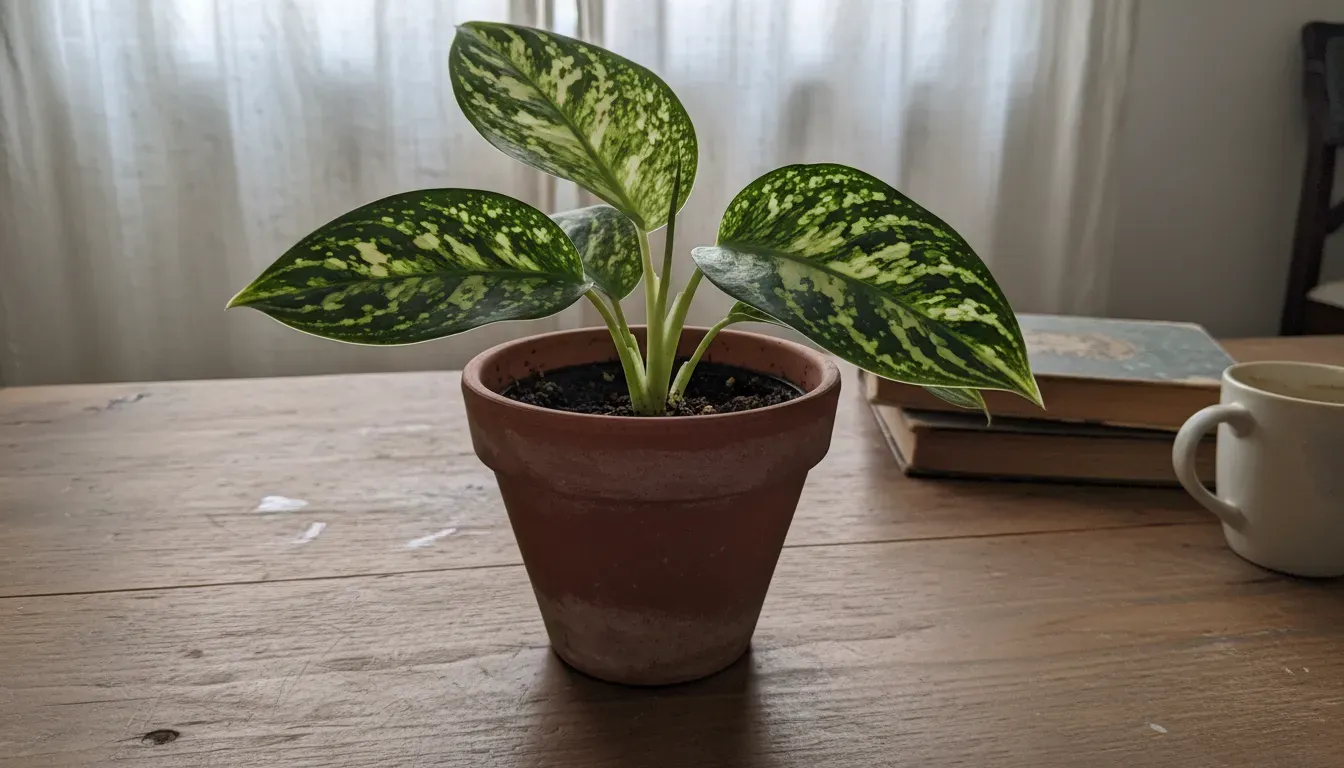
The Aglaonema pictum ‘Tricolor’ (Camouflage Plant) looks like painted military camo, and that high-contrast mosaic fades fast in low light or dry air. Unlike tougher Chinese Evergreen cousins, this Sumatran form wants consistency more than neglect.
Plant pros weigh in on the baseline: bright filtered light to hold the three greens, humidity around 60% or higher, and soil that stays lightly moist without going soggy. Find a good spot, then leave it there.
Quick Facts
- Difficulty: Moderate
- Light: Bright Indirect
- Water: Water when the top inch feels dry; keep evenly moist, never soggy
- Pet Safety: Toxic to cats and dogs
Light Requirements
Pattern quality is light-dependent. Give bright, indirect light, such as a sheer-curtained south or west window, or a strong east exposure. The plant should see sky brightness without feeling hot sun on the leaf.
In low light, new leaves shrink and the mint-lime-forest contrast muddies into flatter green. Direct afternoon sun can scorch thin leaves in a single hard hour. Pull back from the glass or add a sheer if you see bleach spots.
Watering Schedule
Keep the mix consistently lightly moist. Wait until the top inch feels dry, then water thoroughly and empty the saucer. Do not leave the plant sitting in water.
‘Tricolor’ is more mineral-sensitive than many Aglaonemas. Brown tips with otherwise good humidity often point to fluoride or chlorine in tap water. Prefer rainwater, distilled, or filtered water when you can.
Humidity & Temperature
Aim for 60% humidity or higher. Dry winter heat crisps leaf edges quickly. Use a humidifier or group the plant with other moisture-loving foliage to build a shared pocket of humidity.
Skip misting. It barely moves room humidity and can spot the leaves. Keep temperatures warm and stable, in the same comfort range as other tropical houseplants, and away from cold drafts.
Soil & Potting
Roots are not aggressive on this slow grower. Use an airy mix: equal parts quality potting soil, orchid bark, and perlite. Water should move through the pot within seconds.
Heavy soil holds water against the roots and invites rot before the top growth shows clear trouble. Choose a pot with drainage holes. Repot only when roots fill the container; frequent upsizing is unnecessary.
Fertilizer
Feed lightly in spring and summer with a balanced liquid fertilizer diluted to half strength about once a month. Hold feed in fall and winter when growth slows.
Fresh mix already carries some nutrition. Do not stack fertilizer on a newly potted plant. If a white crust appears on the soil, flush with clean water and pause feeding.
Pruning & Maintenance
Stability matters. Once light and humidity are right, avoid frequent moves. Sudden location changes can trigger leaf drop on an otherwise healthy plant.
Wipe leaves every few weeks with a soft, damp cloth to keep the camouflage pattern sharp and photosynthesis efficient. While you clean, check undersides for spider mites, which favor dry, dusty foliage.
Remove damaged or fully spent leaves at the base with clean shears.
Propagation
Division at repotting is the most reliable method. Separate rooted clumps carefully and pot into the same airy mix. Keep new plants warm and humid until growth resumes.
Stem cuttings can work for some growers: take a healthy tip, root in moist airy mix under high humidity, and be patient. This cultivar is slow, so expect weeks rather than days.
Common Problems
Fading pattern: Too little light. Move to brighter filtered light.
Brown crispy edges: Dry air or mineral-heavy water. Raise humidity and switch water source.
Leaf drop after a move: Stress from environment change. Stabilize light, humidity, and temperature, then wait.
Root rot: Soggy, heavy soil. Refresh into bark-and-perlite mix and water less often.
Spider mites: Fine webbing and stippling in dry rooms. Wipe leaves, raise humidity, and treat with insecticidal soap as directed.
Pro Tips for Long-Term Maintenance
Treat location as part of the care plan. Once you find bright filtered light and steady humidity, leave the plant there and handle watering with rainwater or filtered water. Patience beats constant tinkering with this slow mosaic.

About the Author
Silas
The Practical Greenhouse Mentor
"Silas treats the greenhouse like a workshop of practical results. After 40 years of dirty hands, he’s learned that thriving plants are the result of honest observation and small, correct moves rather than luck. He’s the neighbor who knows exactly why your Pothos is pouting and how to fix it without the fuss."