
Aglaonema Care
Keep Chinese Evergreen healthy in low to moderate light with warm rooms, drainage holes, and soil that dries between thorough soaks. Colorful varieties need brighter filtered light than deep-green types.


Aglaonema
Aglaonema spp.
Care Level
Easy
Light
Low
Water
Moderate
Humidity
Moderate
The Aglaonema (Chinese Evergreen) thrives in rooms where many tropicals stall, but it still fails when roots sit wet for days. Yellow leaves and mushy stems are usually a drainage and watering-frequency problem, not a “low light curse.”
Plant pros weigh in on a simple baseline: keep it warm, keep it out of harsh sun, and let the top of the mix dry before you soak again. Dark green types handle dimmer corners; pink, red, and white variegated types need brighter filtered light to keep their color.
Quick Facts
- Difficulty: Easy
- Light: Low to bright indirect (brighter for colorful cultivars)
- Water: Water when the top 2 inches feel dry
- Pet Safety: Toxic to cats and dogs
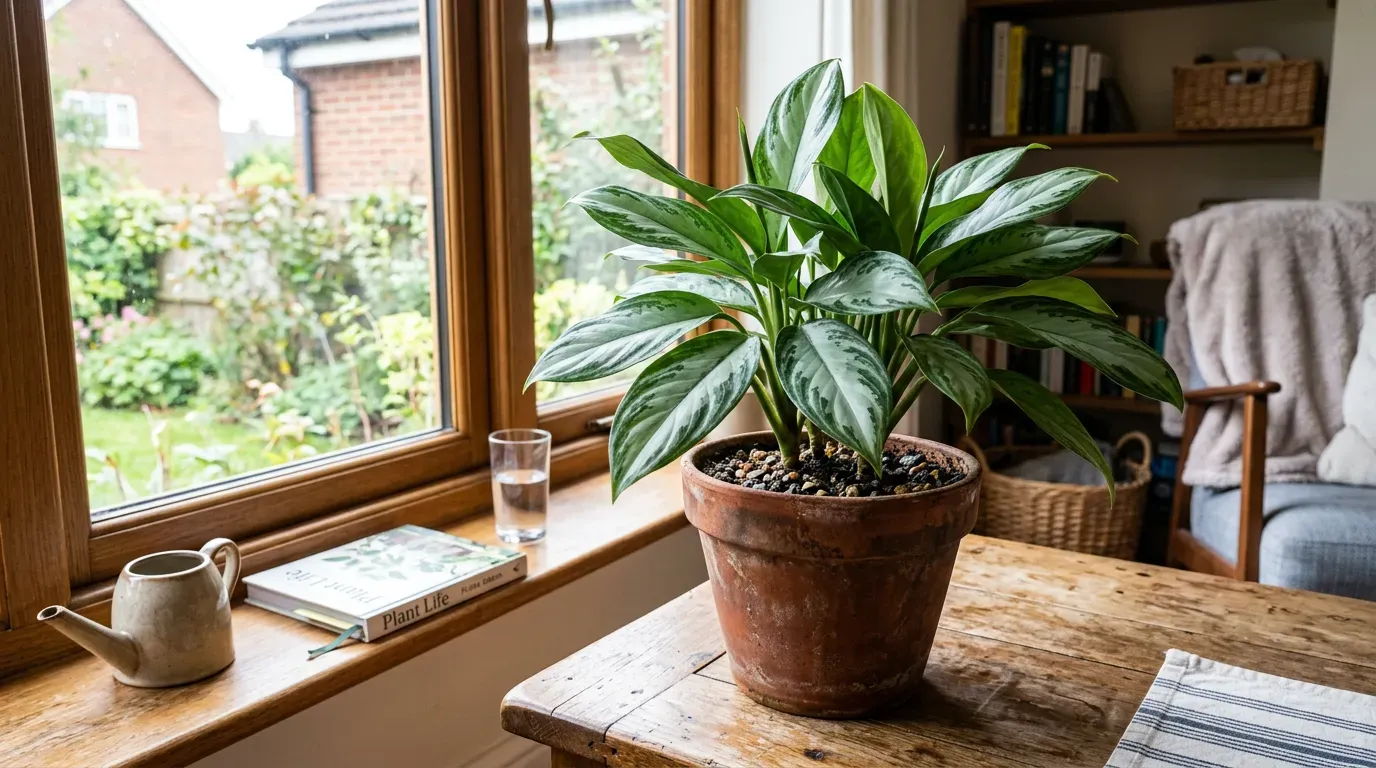
Light Requirements
Deep green Aglaonemas carry lots of chlorophyll, so they can run on lower light than most foliage plants. That still means real ambient light, not a windowless closet.
Colorful varieties with pink, red, or white markings have less green tissue available for photosynthesis. Give them a brighter filtered spot near a window with a sheer curtain. If the plant leans hard toward the glass, it is asking for more light.
Avoid hot direct sun. Scorch shows up as bleached or crispy patches on the leaves.
Watering Schedule
Water by feel, not by weekday. Stick a finger about two inches into the mix. If it feels cool and damp, wait. If it feels dry and dusty to your first knuckle, soak thoroughly until water leaves the drainage holes, then empty the saucer.
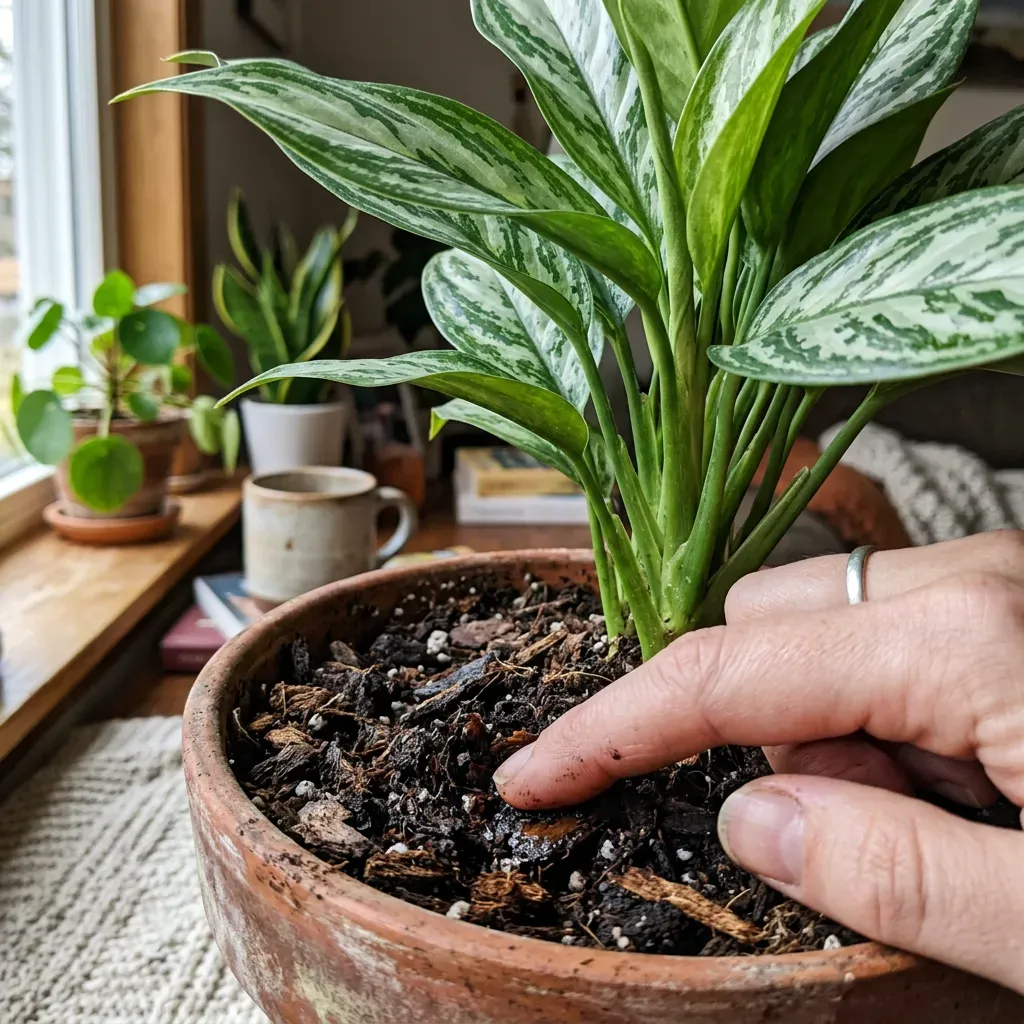
Overwatering is usually about frequency. Roots need air between drinks. Soil that stays saturated can start root failure within a couple of days. Dry indoor air or a drafty window can speed how fast the plant uses water, so check more often in those spots without switching to a fixed calendar.
Humidity & Temperature
Aglaonemas like the same temperatures most people do. Keep them above 60°F. Cold drafts and AC blasts can leave mushy, translucent patches on leaves.
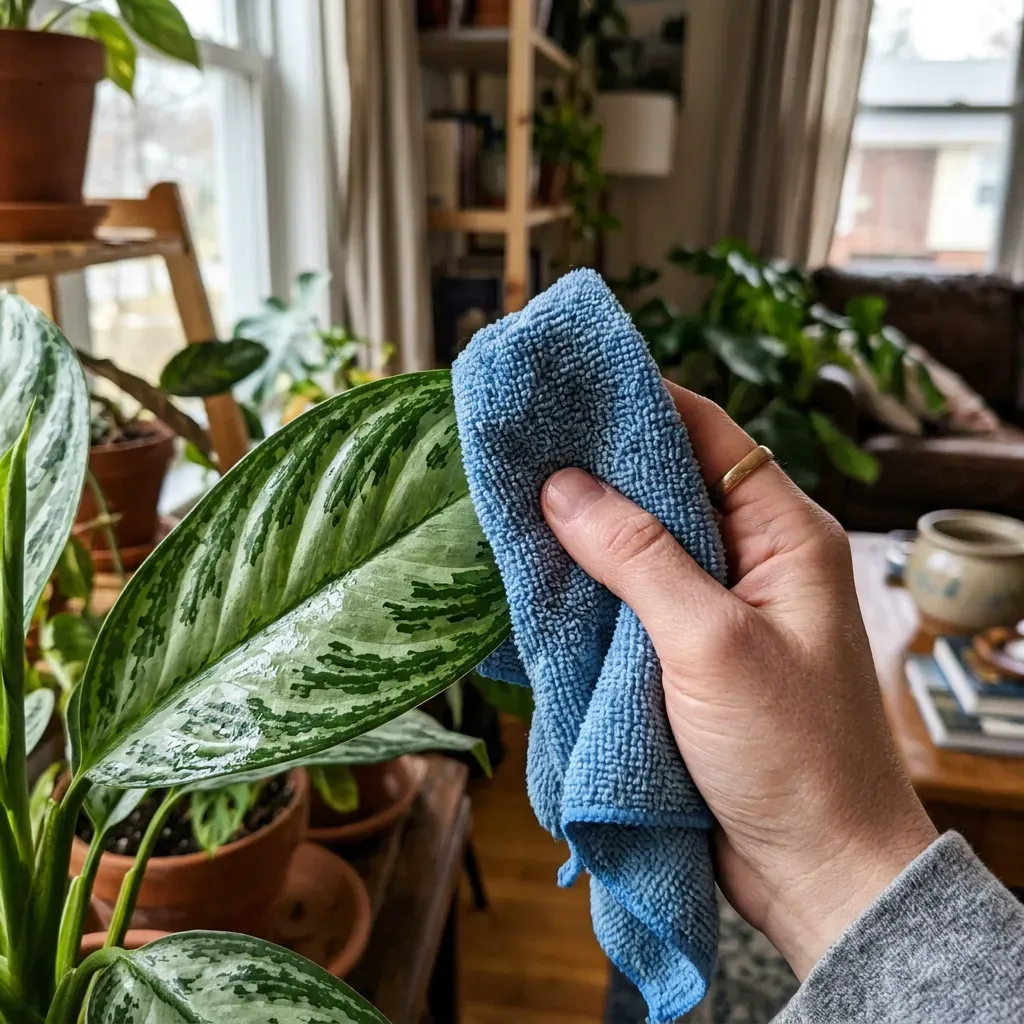
Average home humidity is often enough, but very dry air can crisp leaf tips. A pebble tray or nearby grouping of plants helps. Wipe leaves with a damp cloth weekly so dust does not block light.
Soil & Potting
Skip dense off-the-shelf mixes that compact into a brick. Blend about two parts quality potting mix with one part coarse grit such as perlite, pumice, or orchid bark. You want springy soil with lasting air pockets after watering.
If water sits on the surface for more than about ten seconds, the mix is too tight. Always choose a planter with large drainage holes. Repot when roots crowd the pot or the mix collapses and stays wet.
Fertilizer
Feed lightly in spring and summer with a balanced liquid houseplant fertilizer about once a month at half to full label strength, depending on growth. Hold fertilizer in winter when growth slows.
If leaf tips brown despite good humidity, salts or tap-water minerals may be building up. Let tap water sit 24 hours when practical, or use filtered water, and flush the pot quarterly with a slow gallon of clean water through the drainage holes.
Pruning & Maintenance
Remove yellowing lower leaves as they age. Wipe foliage regularly and check leaf undersides for pests while you clean. Keep the plant away from cold windows in winter.
Do not expect colorful cultivars to hold pattern in a dark hallway. Move them closer to filtered light before you assume fertilizer will fix fading.
Propagation
Division at repotting is the straightforward method. Ease the plant from the pot, tease natural clumps apart so each section has roots and stems, and pot into fresh, airy mix. Keep new divisions warm and evenly moist (not soggy) until new growth shows.
Stem cuttings can root in water or moist mix for many cultivars. Take a healthy tip with a few leaves, let the cut sit briefly if the stem is soft, then root in a warm, bright indirect spot.
Common Problems
Yellow leaves: One or two oldest leaves yellowing can be normal aging. Several leaves yellowing quickly with wet soil often means root trouble.
Crispy margins: Dry air or mineral buildup. Raise humidity and flush salts.
Drooping with wet soil: Root rot risk. Check roots, trim mush, and repot into fresh mix with better drainage.
Drooping with dry soil: Simple thirst. Soak thoroughly and resume the two-inch check.
Fading color on variegated types: Too little light. Move to brighter filtered light.
Pro Tips for Long-Term Maintenance
Once a season, take the plant to the sink and run a generous flush of filtered water through the pot to leach fertilizer salts. Pair that with weekly leaf wiping and a warm, stable spot, and Aglaonema stays one of the most forgiving low-light plants you can grow.

About the Author
Silas
The Practical Greenhouse Mentor
"Silas treats the greenhouse like a workshop of practical results. After 40 years of dirty hands, he’s learned that thriving plants are the result of honest observation and small, correct moves rather than luck. He’s the neighbor who knows exactly why your Pothos is pouting and how to fix it without the fuss."