
African Violet Care
Keep Saintpaulia blooming with a steady light cycle, room-temperature watering, an airy soilless mix, and a slightly snug pot. Plant pros lean on environment first, not calendar guessing.


African Violet
Saintpaulia ionantha
Care Level
Moderate
Light
Bright Indirect
Water
Moderate
Humidity
Moderate
If your African Violet grows lush green leaves but rarely flowers, the plant is usually missing a reliable light cycle, not affection. Fuzzy leaves and a delicate crown also punish cold water and soggy soil faster than most houseplants.
Plant pros weigh in on the same baseline: give 14 to 16 hours of bright, filtered light, protect the crown from wet cold water, and keep the plant slightly root-bound in an airy soilless mix. Get those three right, and year-round blooms become realistic.
Quick Facts
- Difficulty: Moderate
- Light: Bright Indirect (14–16 hours daily)
- Water: Lift the pot; water when it feels light
- Pet Safety: Safe for cats and dogs
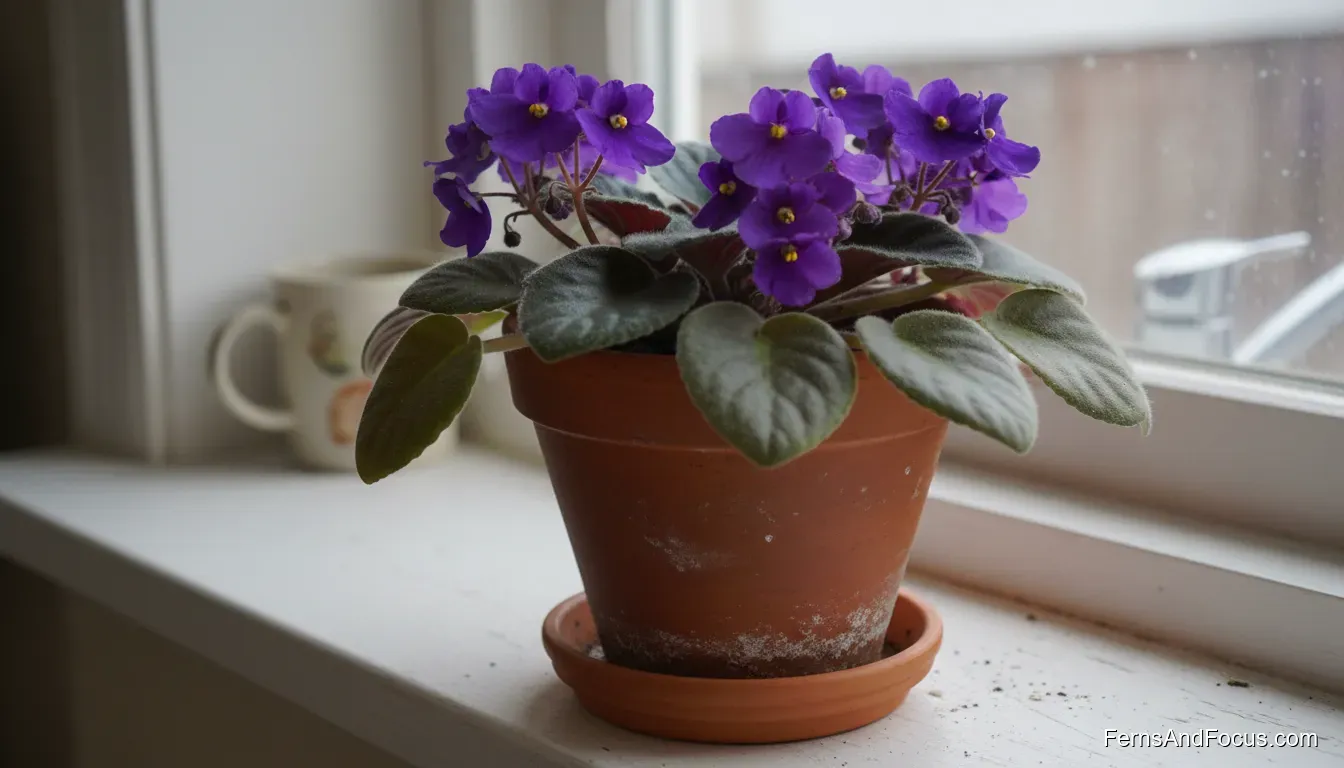
Light Requirements
African Violets bloom on a schedule. Aim for 14 to 16 hours of high-quality, filtered light every day, then a true dark period of 8 to 10 hours. That night stretch is when the plant finishes moving daytime energy into bud formation. Skip the dark stretch and the plant often stays leafy without flowers.
An east or northeast window works well because it delivers bright light without harsh afternoon heat. If window light is inconsistent, put a simple LED or fluorescent setup on a timer. Timers remove guesswork and keep the bloom cycle steady.
If growth leans hard to one side, rotate the pot a quarter-turn whenever you check soil weight. Even light keeps the familiar circular rosette.
Watering Schedule
Cold tap water is a common beginner mistake. It can shock fuzzy leaves and roots and leave permanent white ring spots. Use room-temperature water, or water that is slightly warm.
Skip the calendar. Use the lift test: water when the pot feels noticeably light. That means the mix has used its reserve without letting roots dry to the point of die-back.
Bottom-water as your routine. Set the pot in a shallow saucer for about 20 minutes until the top of the mix feels damp, then empty the saucer. This keeps the crown dry and lowers crown-rot risk.
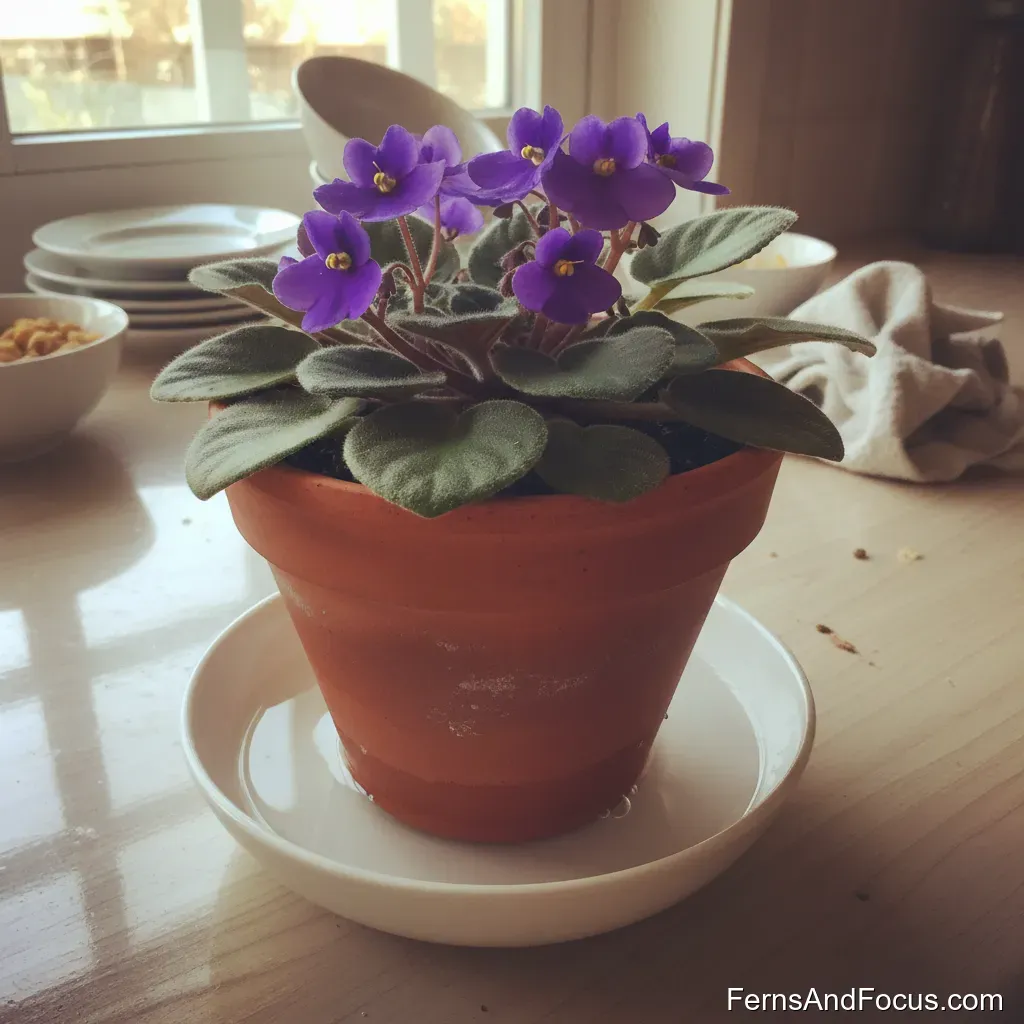
Once a month, top-flush with room-temperature distilled water or rainwater. That rinse clears fertilizer salts that build on the soil surface and pot rim and can burn leaf stems (petioles).
Humidity & Temperature
Keep temperatures between 65°F and 80°F. A nighttime drop of about 10 to 15 degrees helps the plant hold daytime energy for blooms instead of burning it on overnight respiration.
Aim for 40% to 60% humidity. Dry air can close leaf pores, slow growth, and cause bud blast, where buds dry and drop before opening. Group plants together or use a pebble tray. Keep the pot above the water line so roots still get air.
Soil & Potting
African Violet roots are fine and fibrous. They need an airy foundation, roughly half solids with open space for air and moisture. Standard garden soil and dense bagged mixes are too heavy.
Use a soilless mix: quality sphagnum peat moss with about 50% perlite or vermiculite. Target a slightly acidic pH around 6.0 to 6.5. Perlite keeps permanent air pockets that do not collapse when the mix is damp.
Repot about once a year into fresh mix. Peat breaks down, acidity drifts, and salts build up. Fresh substrate resets the root zone.
Keep the plant slightly root-bound. Follow the one-third rule: pot diameter should be about one-third the leaf span. A 9-inch plant belongs in a 3-inch pot. Prefer shallow azalea or squat pots over deep nursery pots, which can hold a stagnant reservoir at the bottom. Plastic holds moisture more evenly than terracotta, which can pull salts to the rim and burn petioles on contact.
Fertilizer
In soilless mixes, you supply the nutrients. Skip heavy monthly dumps that can burn fine roots. Use a weekly-weakly approach: a Gesneriad or bloom-focused fertilizer diluted to about one-quarter strength with every watering.
Watch the leaves. Uniform yellowing on oldest bottom leaves can signal nitrogen shortfall. Stiff, upright leaves with purplish undersides can point to phosphorus deficiency. Orange or white crust on the soil surface means salts are building; flush and ease concentration.
Pruning & Maintenance
Dust blocks light and leaf pores. Sweep leaves with a soft artist’s brush or cosmetic brush from base to tip, supporting each leaf with your other hand so brittle petioles do not snap.
For heavier dirt, tilt-wash with lukewarm water so runoff moves away from the crown. Dry the plant in warm shade with good airflow. Never put wet leaves in bright light; droplets can spot-burn.
Remove suckers (small side shoots) as they appear. They steal energy and break the plant’s circular shape. Strip limp or yellow lower leaves as they age.
If an older plant develops a bare woody “neck,” reset it: strip weak lower leaves, cut so about an inch of stem remains under a healthy rosette, scrape hardened tissue to fresh green, discard the old roots, and pot the scraped neck into damp 50/50 perlite and peat until the lowest leaves sit at the rim.
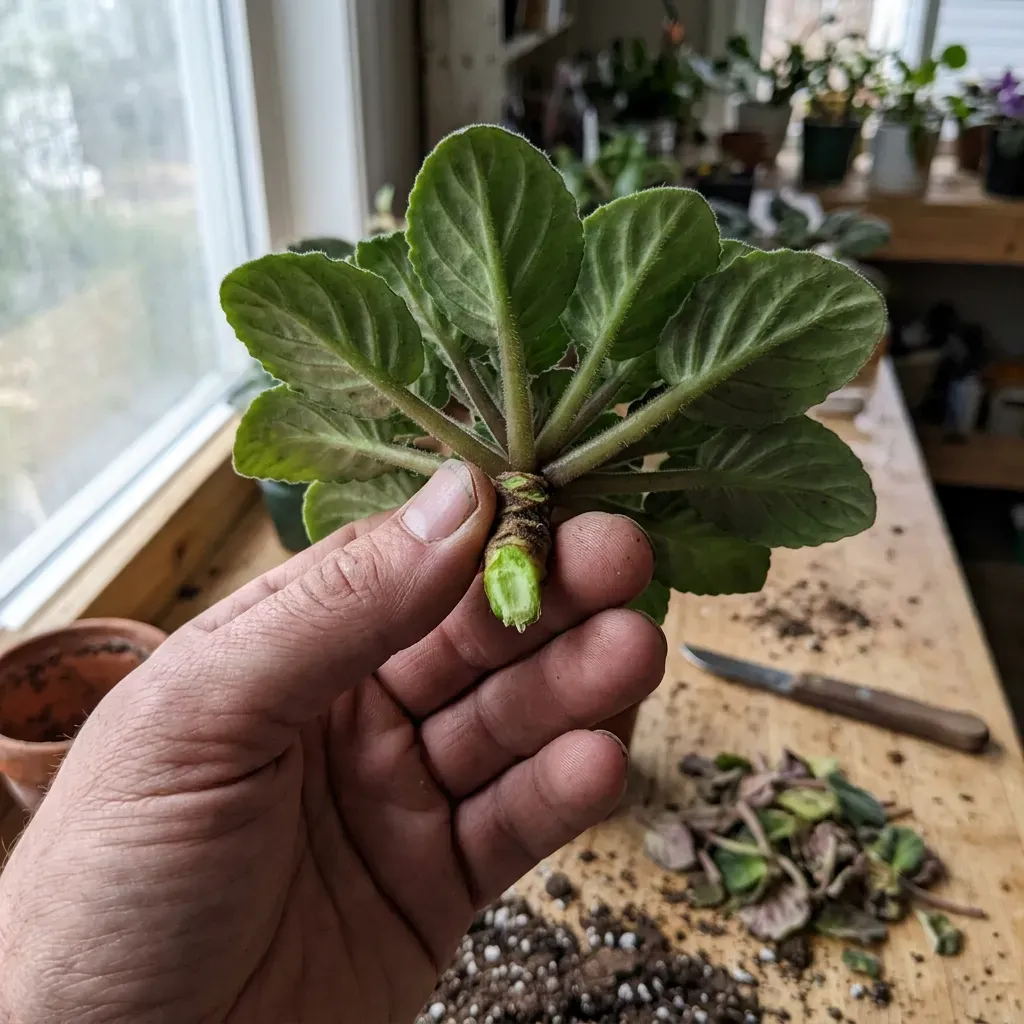
Bag the plant in a clear bag or humidity dome for 30 to 45 days while new roots form, then acclimate slowly back to room air once center growth resumes.
Propagation
Leaf cuttings are the reliable route. Choose a firm middle-row leaf. Avoid the oldest bottom leaves and the youngest center leaves. Cut the petiole at a 45-degree angle, leaving about 1.5 inches of stem to give more surface for roots.
Insert the stem into a sterile, porous mix such as 50/50 perlite and vermiculite. Make a pilot hole with a pencil so you do not crush tissue. Water lightly, then enclose the cutting in a clear bag or bakery clamshell.
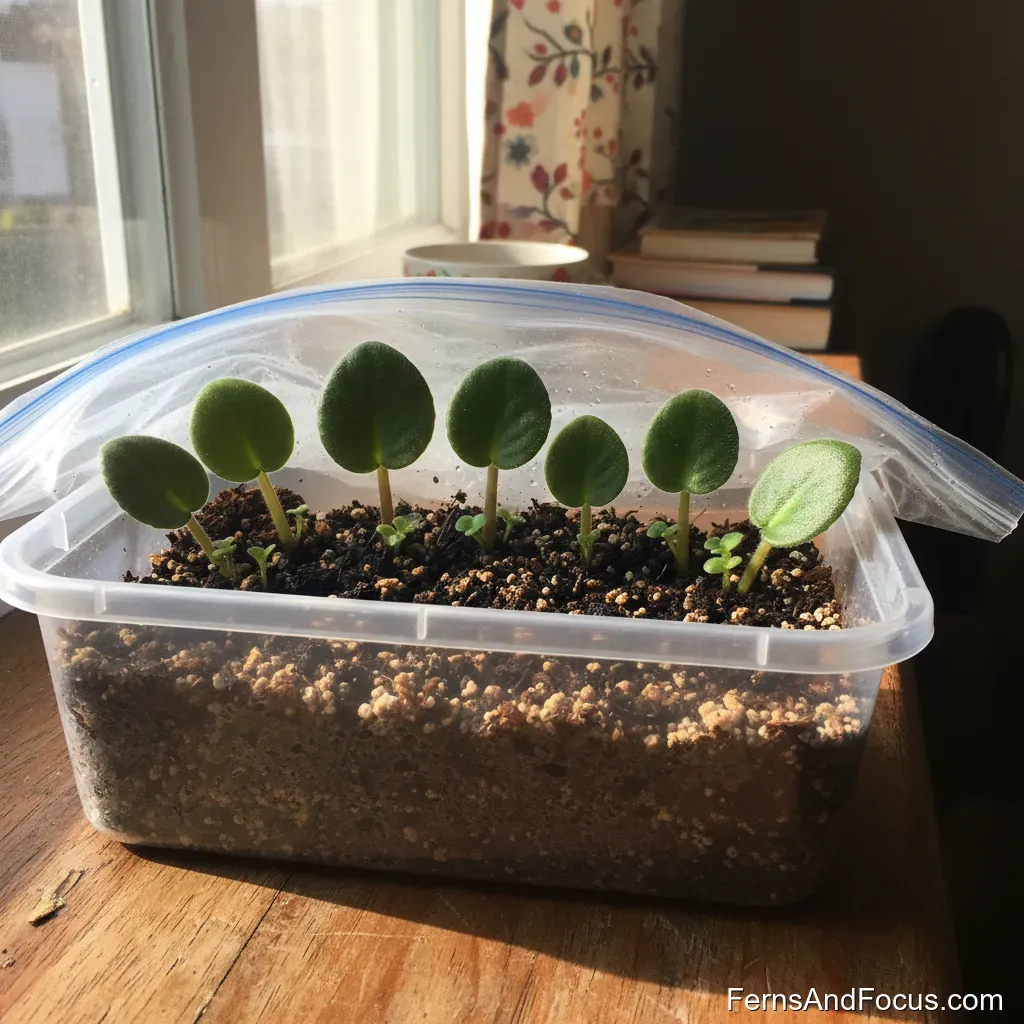
Expect roots in 3 to 4 weeks and tiny plantlets in 6 to 8 weeks. Separate and pot up once plantlets have 4 to 6 leaves.
Common Problems
No blooms: Usually light hours, missing night dark period, or an oversized pot. Fix the light cycle and pot size first.
Ring spots on leaves: Cold water contact. Switch to room-temperature water and avoid wetting foliage.
Crown or root rot: Water sitting in the crown or chronically wet mix. Bottom-water, empty saucers, and refresh compacted soil.
Bud blast: Dry air or unstable conditions. Raise humidity and keep temperatures steady.
Salt burn on petioles: White or orange crust on soil and rim. Flush monthly and keep dilution weak.
Pro Tips for Long-Term Maintenance
Rotate a quarter-turn every time you lift-check the pot so the rosette stays even. Pair that habit with weekly-weakly feeding and an annual mix refresh, and you give the plant a steady environment instead of boom-and-bust care.

About the Author
Silas
The Practical Greenhouse Mentor
"Silas treats the greenhouse like a workshop of practical results. After 40 years of dirty hands, he’s learned that thriving plants are the result of honest observation and small, correct moves rather than luck. He’s the neighbor who knows exactly why your Pothos is pouting and how to fix it without the fuss."